Finding the Path (part 2)

By the time the dust settled around the loss of my mother, it was springtime. The weekly fiddle slow jams ceased for the summer. I vowed to practice on my own and I managed to do so, a couple of times. Relieved that I could still flounder my way through Golden Slippers and Flop Eared Mule, I lacked the self discipline to do much else. Summer came and went. In late August, I returned to the Brooklyn fair. Emerging from one of the animal barns, I heard the faint sound of fiddles. While my husband and grandson headed for the midway, I followed the music. There they were, beneath a big, white tent. I stood off to the side and listened, with tears in my eyes. That old excitement filled me again, just like it did one year earlier. 

Missy invited me to repeat the five-week class, which I politely declined. I’d still had enough basic music theory to last the rest of my life. But I asked to be included when the Monday night slow jams resumed and she welcomed me, with open arms. 

My progress was slow and frustrating. After a couple of months, I decided to pursue private lessons. I still had a slip of paper with the name of an accomplished local musician who gave lessons. It had been in the case since I rented the fiddle. I Googled her. Yikes! She was pretty impressive. We spoke on the phone and she was warm and friendly. She was also too busy to accept a new student. I was so disappointed. She gave the name of another teacher and assured me that he was more than competent. I had my doubts. I called him anyway. With the sounds of a student’s screechy fiddle in the background, he offered me an appointment later in the week and I accepted. Amazingly, he lived just fifteen minutes away. That never happens when you live in the country. I really had no excuse this time.

My first few lessons were beyond uncomfortable. Being mostly self-taught had disadvantages and I had a lot to overcome. My fundamental mechanics were way off. I was doing everything wrong. I was receiving so much direction that I became completely overwhelmed. There was so much to think about! If I concentrated on my fingering, then my bow went askew. When I tried to play the correct notes, I couldn’t keep time. I was so tense that my hand cramped and my shoulder hurt. To make matters worse, the instructor was relentless. When I heard the frustration in his voice, I drove home close to tears. I couldn’t even look at the fiddle for a few days. I knew I’d be in trouble the following week but I just didn’t care. I considered quitting. Three lessons was all it took to make me feel hopeless. I was sad that my dream of playing the fiddle was coming to an end. 

What I didn’t realize, was that it was just beginning.  

I arrived at what I was beginning to think of as my final lesson. With a bit of a chip on my shoulder, I warned him that the only thing I had accomplished the previous week was that I hadn’t quit. Yet. Only half joking, I told him I was thinking about taking up the ukulele. Half kidding (I hope), he suggested the harmonica. We talked a bit about my difficulties and disillusionment. Gently, he led me through the lesson. At the end of the hour, I had softened. I had managed not to shed any tears, at least. As is the routine, I paid up for the next month. He playfully agreed that he had managed to get me to commit to another four weeks. 

This is where my journey truly begins. Although I didn’t realize it at the time, I had achieved a kind of milestone. I had told myself that I didn’t have to do this. And yet, here I was. In the coming weeks, although progress was slow and my frustration remained, I kept going. Thankfully, the Monday night slow jams continued. The opportunity to play for fun among friends who encouraged and supported really sustained me. After that one, particular week of my third lesson, I forced myself to go to slow jam, talking myself out of turning around all the way there. At the end of the evening, I was so glad I had not.

Learning to play music was only a small part of the expedition. I was learning so much more. My weaknesses were exposed in a way that I have managed to avoid for most of my life. Being vulnerable is not something I’m good at. I am impatient. I am a perfectionist. Somehow, I have managed to succeed at most everything else I’ve tried, thus far in life, without having to face the real possibility of failure. With the fiddle, the harder I worked, the more there was to learn. I corrected one thing and another three things became glaringly in need of repair. My notes were flat (or sharp), my timing was off and bow hand seemed to have a mind entirely of its own. 

To make matters worse, I developed a severe case of performance anxiety. Even when a piece sounded pretty decent at home, it came out badly at lessons and slow jam. Now, if you know me at all, you know that I am not shy. I can talk to anybody, anywhere, about anything. But put a fiddle in my hands and all bets are off. I hold on so hard that my hand cramps. “You don’t have to kill it,” my teacher tells me, week after week. “Relax your death grip!” (What I really fear is that it might just kill me!)

We’ve gone back to basics for my lessons. I’m struggling to make the connections between the music I’m reading, the notes my fingers are playing and what my ears are hearing. It’s not enough to simply be able to play the notes I see. Music is much deeper than that. I am finally starting to get that. I’ve had some “ah-ha” moments that often have little to do with sharps and flats and everything to do with my own tenacity. 

Something inside of me has been cracked wide open by this journey. It’s surprising, at this stage of life, to be blindsided by your own susceptibility. Some days, I am amazed by my capacity to persevere. Other days, I want to smash the fiddle against the wall. Mostly, I do the best I can and try to find the satisfaction in it. When I become frustrated, I go back to the earliest tunes I learned and recall how challenging they were, as I breeze through them. That’s progress!

Throughout this, I began to yearn for my guitar. I was afraid to confuse my already deluged brain by expecting my fingers to play the same notes in different positions, on different strings. A couple of weeks ago, I finally caved in, after I dreamed that I was playing. What an emotional roller coaster! Of course, I’ve forgotten more than I ever learned. But it felt like hugging a dear old friend who has been away for a long, long time. My life feels so different now than the last time I played. We have a lot of catching up to do. 

And so the journey continues. I am no longer focused on the end result or the goal of being able to play. I am learning to savor each step along the way – the good days and the ones when I just don’t feel it. Every now and then, something clicks and I get it: I finally play the right note on a difficult song or I understand what personal barrier is preventing me from embracing a new concept. Like running a race, it’s about endurance, not the finish line.

Along the way, I am blessed with finding the right people when I need them. I’ve made some really good friends. Fiddle players rock!  From the skilled artistry of Mike Lyons to the generous inspiration of Missy Joyal to the gifted teaching of Kevin Fallon, I am finding my way. The path is crooked and I occasionally wander off. But, however long it takes, I am making my dream come true. You can count on it.

Finding the path


                                             Part 1: Finding (and losing) the right path

It’s all about the journey, right? We’ve all seen that on a poster or a greeting card. The message is clear: Don’t get so focused on the destination that you miss the scenery along the way. Learning to play music has been that way for me – at least this time around.

When I was a kid, I longed to play piano. I begged my parents. The house was too small to accommodate a piano, they said. But I persisted. As a compromise, I got a guitar for Christmas. I think I was about fourteen. I took weekly lessons for about a year, for $3/hour, often walking the four-mile round trip, carrying my instrument. (It might have been uphill, in winter…)

Like most fourteen-year-olds, I was distracted and more interested in other things (namely, boys). I learned the basics – enough to spend many dreamy summers playing chords and singing popular songs of the 60s. I even taught my best friend to play. In high school, I took a Music Theory class. Thinking it would be a geeky bunch of students, I was surprised (and secretly thrilled) to find myself in a class with some of the local rock’n roll idols. Despite the distraction, I received an A+. Briefly, I considered becoming a music teacher. But in college, I again enrolled in a theory class. Maybe it was the teacher (or the absence of local heart throbs), but the magic was gone. I found it abstract and difficult. 

Fast forward twenty years: I had joined my church choir because, well, I like to sing. Ability was not a requirement, thankfully. No music theory necessary either, although being able to read music was a definite plus. My guitar was collecting dust in a closet. Then, our organist/choir director quit without much notice. To fill the gap, my choir mates and I pooled our resources. We gathered at the home of a soprano who played a little keyboard. Encouraged my friend and chordate, Kevin, I blew the dust off my guitar. He brought his. On a Thursday evening, we figured out the chords to some hymns. On Sunday morning, we muddled our way thru the 10:00am service. We must have sounded terrible! But people were so nice: Apparently, bad music was better than no music. Heartened by their support, we began to practice. Soon, we were playing and singing anthems again! We were invited to perform at a local fundraiser for hunger as well as at another church. The following year, we hosted the hunger event. We actually had a small repertoire of songs that we proudly performed regularly. 

Eventually, a new organist and choir director was found and we continued to play, but less often as time went by. Soon, we were back to being a regular church choir. But it was a great run, one that brought us closer together. When I look back on my life, it will always be one of my favorite times.

The guitar returned to solitary confinement and life marched on. I really missed playing and I thought about it. A lot. But the niche was no longer there. There were so many other things to do. But, whenever I’d hear live music, I would feel the inevitable pull. For reasons that I do not understand, I never acted on it. If the band had a fiddle player, however, I was interested. I loved the sound and the type of music. Not a stuffy, classical violin, mind you. Think bluegrass. Think mountain music. You simply cannot listen to it and not be happy.

I have always been told that the violin is the hardest instrument to learn to play. But when I was charged up from a performance of fiddlers at a local agricultural fair, I forgot all about that. When they announced a free, five-week fiddle class to anyone interested, I was hooked. 

Now, you know that I believe the universe sends us what we need. Or God does. Or whomever or whatever to which you open your heart. I looked online for a place to rent an instrument. I discovered a renowned artist who restores violins for musicians all over the world. And he lives five miles from me. He is one of the nicest people on this entire planet. Bam!

Armed with my slightly battered rental instrument, I began the class. It was a big class, led by two members of the Old Fiddler Club of RI. A few people had some musical ability but most were clueless. But by the second class, we could eek out a tune. After five weeks, we could fumble our way, slowly, through three or four. The playing field was somewhat leveled. The leaders were extraordinarily patient and encouraging. Their love of fiddling was contagious and motivated us to keep trying.

One of the Old Fiddlers, Missy, invited us to her home for weekly slow jams. I went a couple of times and it was fun. Frustrating, at times. I still felt awkward and lacked confidence. It was December and there was little time to practice, with all of the holiday preparations and celebrations. I promised myself to work harder in January, when I could focus better.

But then my mother got sick. I spent a few weeks making daily trips to sit with her at the hospital before stopping by to check on my dad afterward. My mom passed away and there were so many things to do. Dad decided to move in with my brother and sell the place he’d shared with Mom the past ten years. He asked me to sort through their things and find suitable places to donate them.  It was exhausting, emotionally. My fiddle joined my guitar, in a closet. Gone, but not forgotten.
                                                              Tomorrow: Part 2

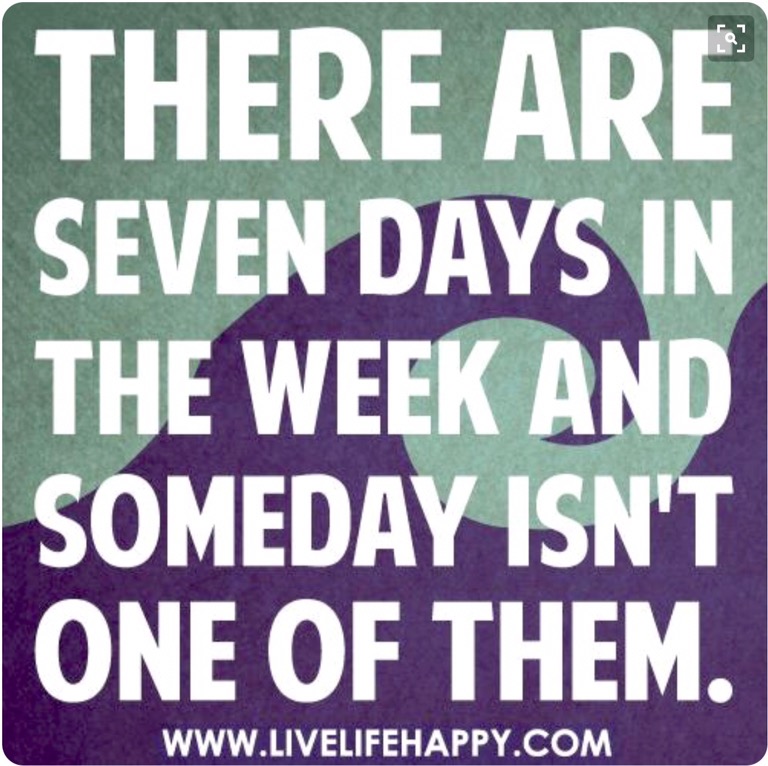
Someday…


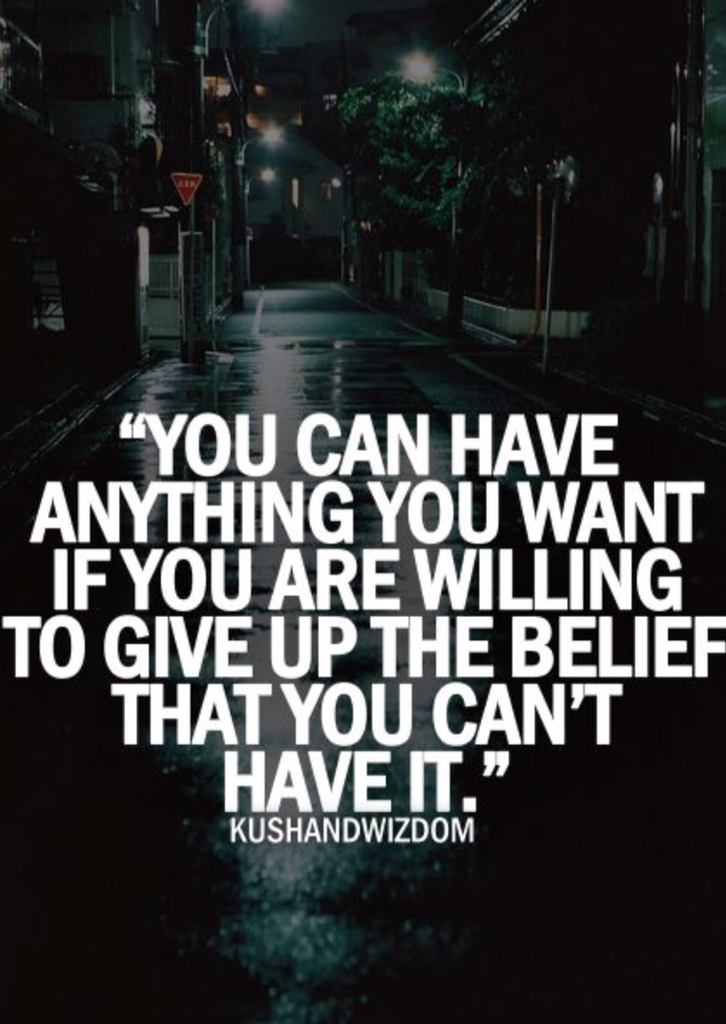
What desire is tempting you? We all have things we want to do. We fantasize about them, dream about them, imagine them. It’s that little idea in the back of your mind that keeps whispering, “someday.”

Somethings are more infatuation. We are suddenly attracted to the thought of doing it, but the desire fades after a while and we eventually forget about it.  Then, there are other yearnings that burn quietly beneath the surface, sometimes for decades – Sometimes, for a lifetime.

What would happen if you gave into it? What if you stopped thinking about it and considered it, instead – seriously explored the idea of doing it?

First, think about the “why” of it. Why haven’t you pursued it? Is there a fear associated with it? There are many barriers to making a dream come true. It could be financial. Perhaps you are afraid of how people will react.

Some of these can be legitimate concerns. If you always dreamed of a lavish trip to the south of France, but are wallowing in credit card debt, that might be a buzz kill. But, more likely, the why is an excuse – something you’ve told yourself so many times that it has become a reality for you. “I could never do that – This isn’t the right time. I’m not smart enough/fit enough/young enough.I don’t have the time/money/knowledge/background.” 

But someday….

Sadly, we are not guaranteed that someday will actually happen. Keeping that dream on the back burner becomes a habit – a way of thinking. We do it until it’s too late. Eventually, it becomes a regret.

There is hope! As you are reading this, that little voice in the far reaches of your practical mind is saying, “Nice theory, but it’s never going to happen.” Just for a moment, tell him or her to shush! Consider, if you will, how you might explore the idea of acting on your desire in a safe and sane manner. We’re just exploring the idea – nothing crazy, no risks. Just three simply steps.

Set aside some time. Maybe you only need a couple of hours. Perhaps one day can be devoted to exploring your dream. No action – just considering what it might look like. Go to the library, take a class, read up on it online. Visit the place where it happens, talk to someone who has done it. Learn about it. This single effort might change things – You may discover something about your idea that squashes your desire. Great! Now you are free of it and can move on to something else that you’ve always wanted to do!

Break down the barriers. Answer the questions! How much will it cost? How much time would it take? What do I need to know first? Educate yourself. Answer the “why” as in, ‘this is why I haven’t done it.’

Make it real. Tell someone what you want to do. If you’re still uncertain how your partner or friends might react, tell a stranger. Tell someone who has done it – That’s one way to gather information and support. Surely, they will respond enthusiastically!

Now, you’re armed with the right information and inspiration! It hasn’t cost you anything  and you’ve not embarrassed yourself. It’s still your secret. Sit with it for a little longer, if you like. 

If this process is scary to you, start small. We all have things we want to do but haven’t gotten around to it. It might be something small, like trying an Indian restaurant. Google local options, look at the menu, drive by. Tell someone you’ve been thinking about trying it. Make it happen! Baby steps. 

Exploring our dreams and desires opens us up to new adventures. Even if we decide it wasn’t meant to be, we learn something about it and about ourselves. That’s called personal growth. When it comes up in conversation, instead of your mind being filled with self-doubt and regret, you’ll be filled with knowledge and experience. That’s called confidence.

What dreams and desires are burning slowly in the back of your mind? When are you going to put aside the time to safely explore them? What is stopping you?

What are you waiting for?

I suffer from FOMO


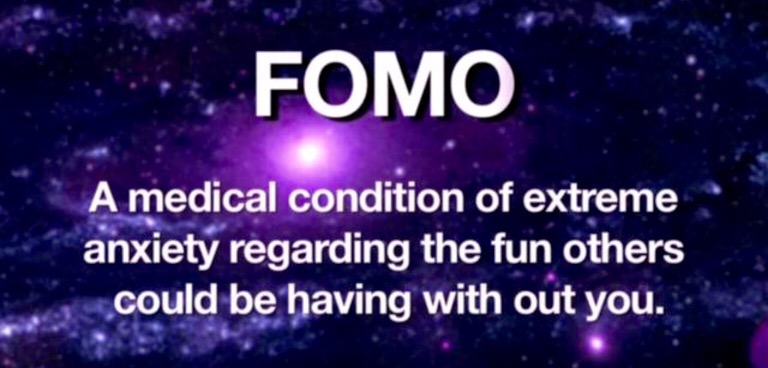
Admittedly, I am a bit of a ‘people person.’ I really hate to miss a good time and do everything in my power to be there whenever a friend is having a soirée. Somehow, it never occurred to me that this was indicative of a deeply-seeded psychological problem. Apparently, I was wrong because, clearly, I suffer from FOMO: Fear Of Missing Out. I recently read an article that outlined the diagnosis criteria. The author went on to suggest that people with FOMO fall into one of three distinct categories.

People often comment on my level of activity. I like to do a lot of things. It’s a choice that I make. However, this is not an irrational fear that I might miss something important. The piece further implied that I am incapable of being by myself and grapple with my own ideas and emotions whenever I’m not out having a good time.

Huh?

Another cause of my mental distress could be that I feel cornered by my personal circumstances from which I am obviously trying to abscond. As if staying home to wash the bathroom floor should keep me from celebrating something (anything!) with my friends. 

Seriously?

Wait – There’s more. If the previous explanations haven’t exposed my insecurities, then I am undoubtedly living with trepidation that my friends are going to forget me or – worse – replace me. That must be it! Regardless of decades of friendship, seeing each other through marriages, divorces, losses of jobs, homes, husbands, parents and even children, my friends have an understudy waiting in the wings for the one time I fail to attend an event. Oh, the pressure!

Give me a break.

Unfortunately, we live in a society that is eager to label behaviors. If I were a recluse who isolated myself, I’d be accused of having PDA (Panic Disorder with Agoraphobia). There is an acronym for everything. Because I prefer laughing, making music or dancing the night away with friends to sitting home watching television, I suffer from FOMO. 

Who gets to decide what’s normal behavior and which is just a personal preference? Can’t we just have a particular quirk? Why must everything have some sinister, underlying cause?

Now, I am questioning my own sanity. Perhaps I also suffer from acute WAFF (Writes Alot For Fun). Last night, I had symptoms of PAF (Plays A Fiddle). Just last week, I had an attack of VAMEL (Visits Art Museums & Eats Lunch). 

It might be time for an intervention. Hopefully, I can address my issues with outpatient treatment and medication. Perhaps I should start a support group for people with FOMO – I imagine it would be very well attended, since no one could stand to miss it! Actually, it sounds like fun. See you there?

Balancing Act

For as long as I can remember, I have kept lists. There is a running ‘To Do’ list on my iPad, assigning tasks to each day. Checking off things as I complete them gives me a sense of accomplishment. Still, it’s difficult not to dwell on those things that I did not do. No matter how productive I am, there’s always some guilt or regret. 

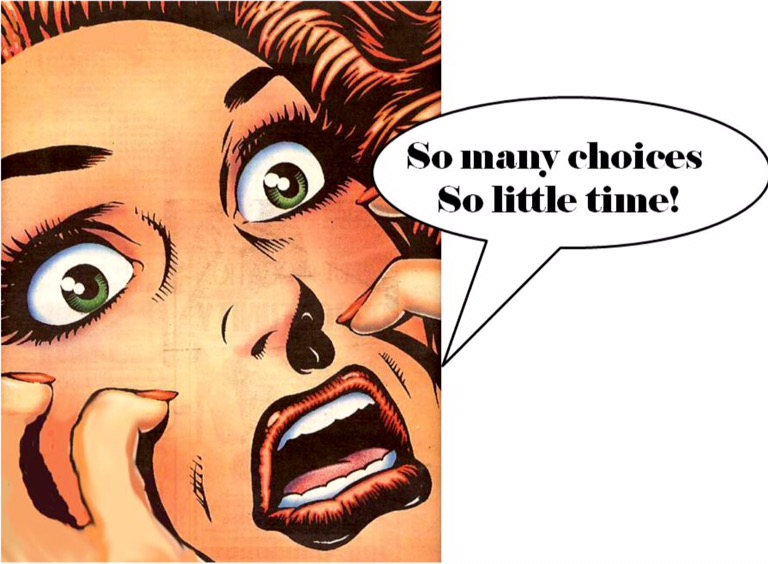
Simply, there are not enough hours in the day to do all of the things I want to do – and to do them well. If I could somehow extend the day by two hours, it would help. And, to whom should I address my petition for adding an extra day to the end of the week? I even have a name for it: Thursday, Friday, Babsday.

Wouldn’t it be great to have a whole extra day, when we could catch up on all those things we meant to do, but just didn’t have time? Imagine eight days a week – Just like the Beatles’ song! You could finally finish that book you’ve been meaning to read. Or maybe you’d reschedule that lunch with a friend you had to blow off. Plant a tree. Wash the windows. Catch a ballgame. The possibilities are endless!


But alas, Babsday is only a fantasy. Reality says we have to get it all done in seven days. I’ve been talking to busy, creative people and reading up on theories of increasing productivity. I’ve learned that lists are good. Multi-tasking is bad. I’ve decided to tweak my approach to productivity, based on what I’ve learned. Here are some things you might try, too!

  1. Lists: Keep a list of tasks that will be repeated either daily or several times a week. For example, writing a blog, practicing music lessons, walking/exercise. 

                      Make a separate list for longer-term goals and projects, like putting things aside for the church yard sale and sorting through old photos. Review the lists every morning, as you plan the day ahead.

      2. Determine what time of day you might be most productive and try to complete a big chore. I love my retired mornings, when I relax with my coffee, read eMail, catch up on social media. Then, I write this blog. But sometimes, it goes on for a couple of hours. Not good. Morning is optimal for most people. I need to limit my coffee time or complete something before I sit down with the iPad.

            By the same token, recognize your ‘low’ time of day and take a break. Chances are that whatever you force yourself to do will leave you feeling frustrated and inadequate, anyway, so don’t fight it. 

     3. Limit electronic use: Oh boy. Am I guilty of this! How many times do I tell myself that I’m just going to check my messages, only to become distracted and let an hour pass by? I’m going to check less and, when I do, set a timer.

     4. Television: Actually, I don’t watch all that much. I am out almost every night during the week. When I come home, however, I usually relax in front of the boob-tube for a bit while simultaneously playing ‘Words With Friends’ or browsing Pinterest. Instead, I’m going to try using this time for researching or outlining the next day’s blog. (This will save time in the morning). You might try folding laundry while watching television. Or pay bills – Most of what’s on is pretty mindless, anyway. Use the time wisely – This is one time when I feel multitasking is good!

     5. Set aside chunks of time for you: I can get my other writing done by assigning an afternoon for just that. Sometimes, I need to get away from the house – somewhere I won’t be interrupted by the dog needing to go out or the phone ringing (or the laundry). If I choose the day/time and write it in my calendar, I’m more likely to keep the commitment to myself. 

In any given week, I have a lot of balls in the air. Ultimately, some of them get dropped. Usually, that’s okay. When it’s not, I need to do a better job of prioritizing. Eating healthy takes a lot of time and energy: Planning meals, shopping for fresh ingredients and preparing food. That’s a priority. Cleaning the house – Not so much. My various creative endeavors all take extra effort, too: Fiddle practice, writing, dance class, photography. I could really use Babsday for some of that! But, for now, I’ll have to find a way to do without it!

Secret of a Memorable Weekend

I know that it’s pretty late in the day for a blog. To add to the inconvenience, it’s Friday and everybody’s probably in weekend mode already! The day just got away from me because I had an early appointment followed by back to back engagements that kept me occupied until dinner time. So, I’ll keep it short and sweet. 

Allow me to let you in on a little secret that it took me several decades to learn: Nothing bad happens if you neglect your housework. Honest! Just last week, I finally put away the last of my Winter decor. My bin filled with springtime things remains unopened. My hampers are full (again) and I haven’t’ vacuumed in a few days. There’s a box of stuff in the corner of the kitchen, waiting to be taken downstairs. And let’s not even talk about my bureau, other than to say that I haven’t seen the surface in weeks.

Does anyone care? I doubt it. The thing is, I don’t really care (anymore). Why waste time putting little porcelain birds around the house, when I can be outdoors with real ones? And that dust? It will still be there whenever I get around to it. Or even if I don’t.

So, get outdoors this weekend! Call friends and arrange something – anything! Take a walk, find some live music, plant some pansies. And, about that dust? It will still be there on Monday morning. But what do you care? You’ll be back at work! Why not take some good memories along?!

Clean Eating Wrap Up

Today, I am wrapping up my series on Clean Eating. We’ve just scratched the surface here, but I hope to have raised your consciousness a bit and given you some ‘food for thought’ about the things we eat. Small changes are best and can make a big impact on your health, so don’t be overwhelmed.

I strongly encourage you to use the Internet for more information, but be discerning – There are a lot of “experts” out there and loads of accurate formation. Personally, I found Clean Eating Magazine’s website to be pretty see friendly and very comprehensive. There are interesting recipes, free meal plans, shopping lists and a great blog! http://www.cleaneatingmag.com

Please let me know what you find – Good or bad! If you try the recipes I provided yesterday or if you find a web site you want to share, I’m happy to pass along that along a future blog or newsletter!

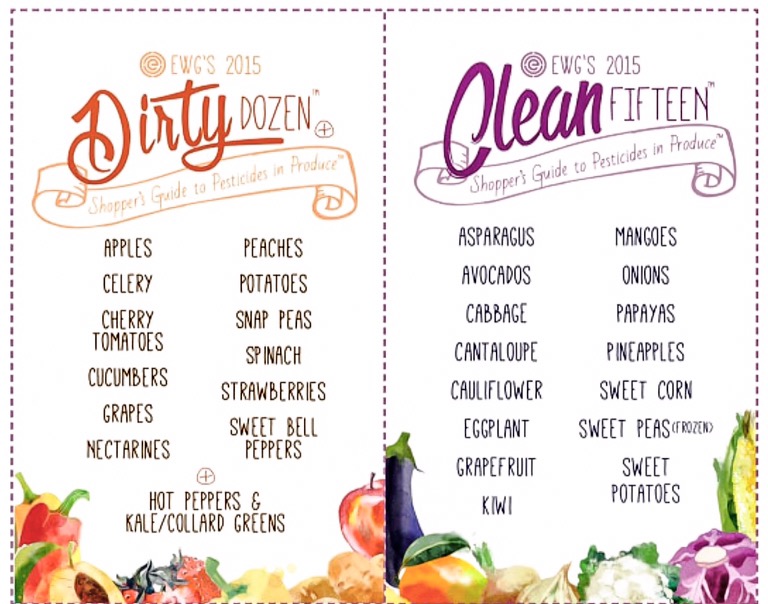
Here is a helful graphic that shows what produce you might want to buy organic. The Dirty Dozen generally have been treated with the most pesticides. So, if you eat a lot of any of them, it might be worthwhile to go organic.

Lastly, don’t be afraid to try something new! There are some different whole grains out there, like amaranth. (See my ‘What are Whole Grains?’ Blog from Feb. 23!) or challenge yourself to ‘eat the rainbow.’ How many different colored vegetables will you eat today?

Choosing Clean Ingredients

Sorting thru all the various info regarding clean eating can be pretty perplexing for a beginner. Some of the “facts” are contradictory from one expert to the next. Recipes have strange ingredients. Yikes!

I’m going to stick with the grocery-store-perimeter theory, at least for now. When canned or frozen ingredients are called for, we now have some idea about how to read the label. 


Chicken — Boneless, skinless breasts are great choices. Whole chickens are a better deal and you get more out of them. If you can afford organic meats, it’s the way to go.


Beef — Choose grass-fed and humanely raised beef. 


Pork — Processed pork, like ham and Canadian bacon, should be avoided. like the plague. 


Fish — Most fish is considered clean, but be aware of the mercury content found in some types of fish. Also, try to buy sustainably. 


Produce — If you are concerned about pesticides, the general rule of thumb is to purchase organics for items with thin skin, like peaches, nectarines and berries. Thicker skinned produce, like bananas and oranges, are a safer bet to buy non-organic if you’re on a budget. Google “The Dirty Dozen” if you want a list of the worst pesticide risks or the “Clean 15” for the safest produce to buy conventionally.

Milk — The best choice is organic, full-fat milk.


Prepared Cheese — Avoid shredded cheese and grate your own. 


Cottage Cheese — Technically, it’s not clean. But it’s a great source of low fat protein. Just watch out for high sodium content in some brands.
The rule for most dairy foods, including cheese, yogurt and milk, is to purchase/consume full fat versions only. Lowfat and nonfat varieties have been processed.  

Other considerations: Salad dressing — Nothing compares good, old fashioned extra virgin olive oil & vinegar. Watch out for preservatives in bottled dressings.

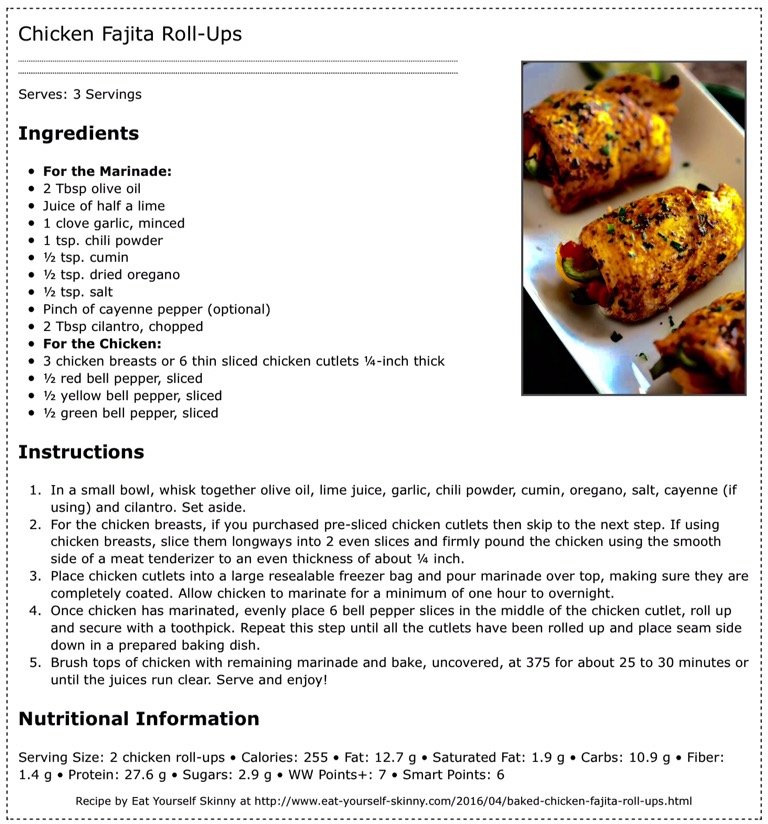
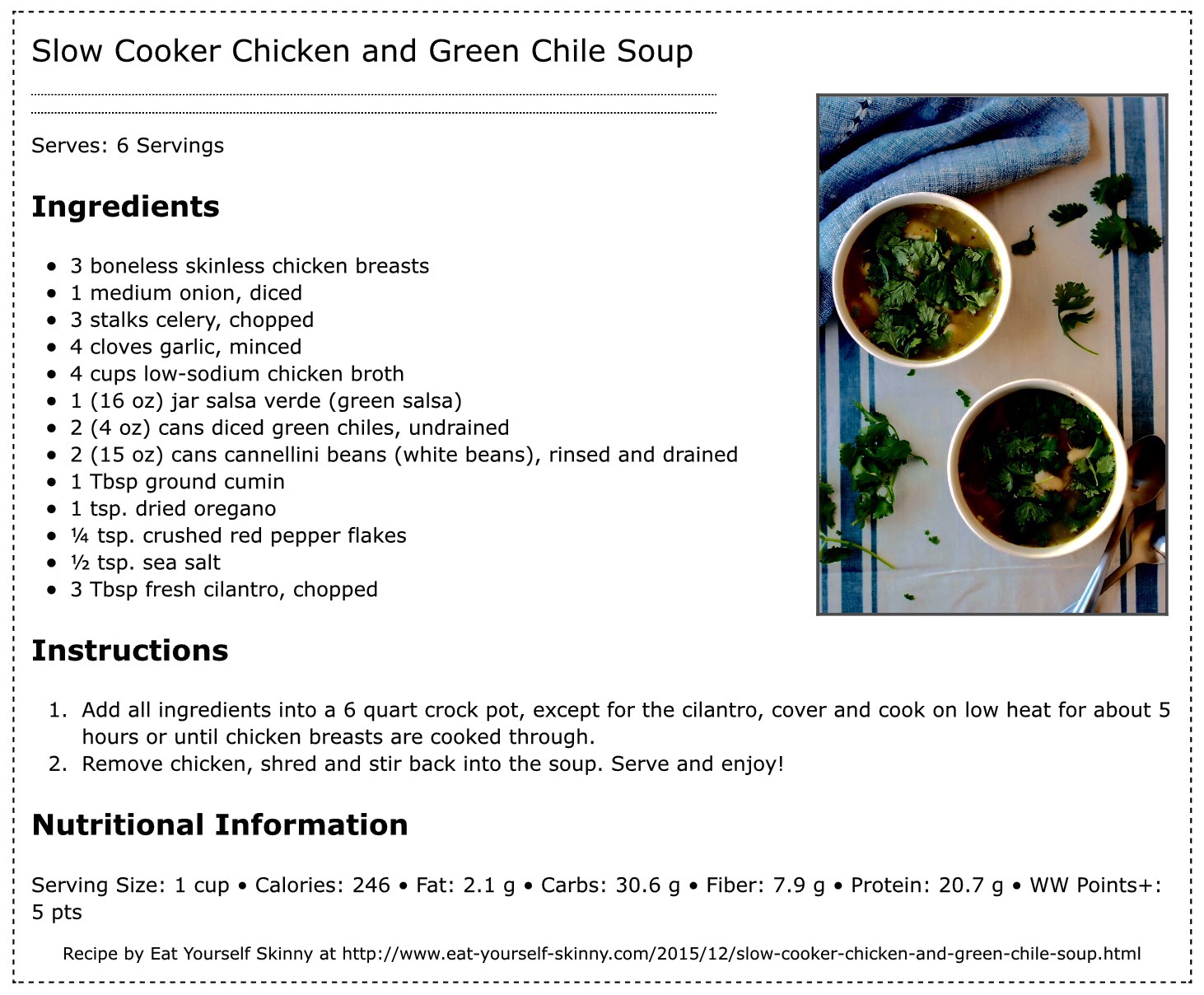
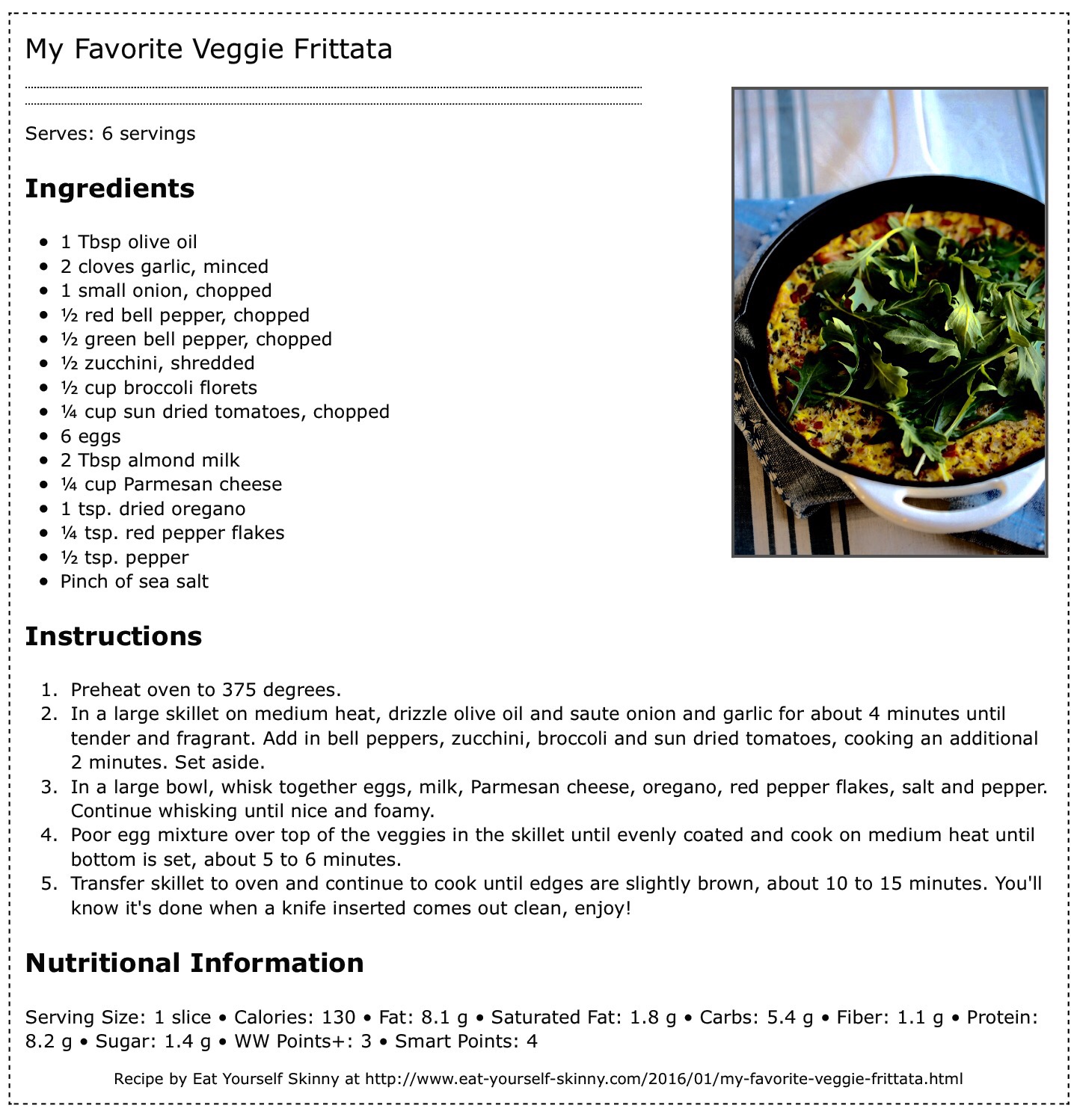
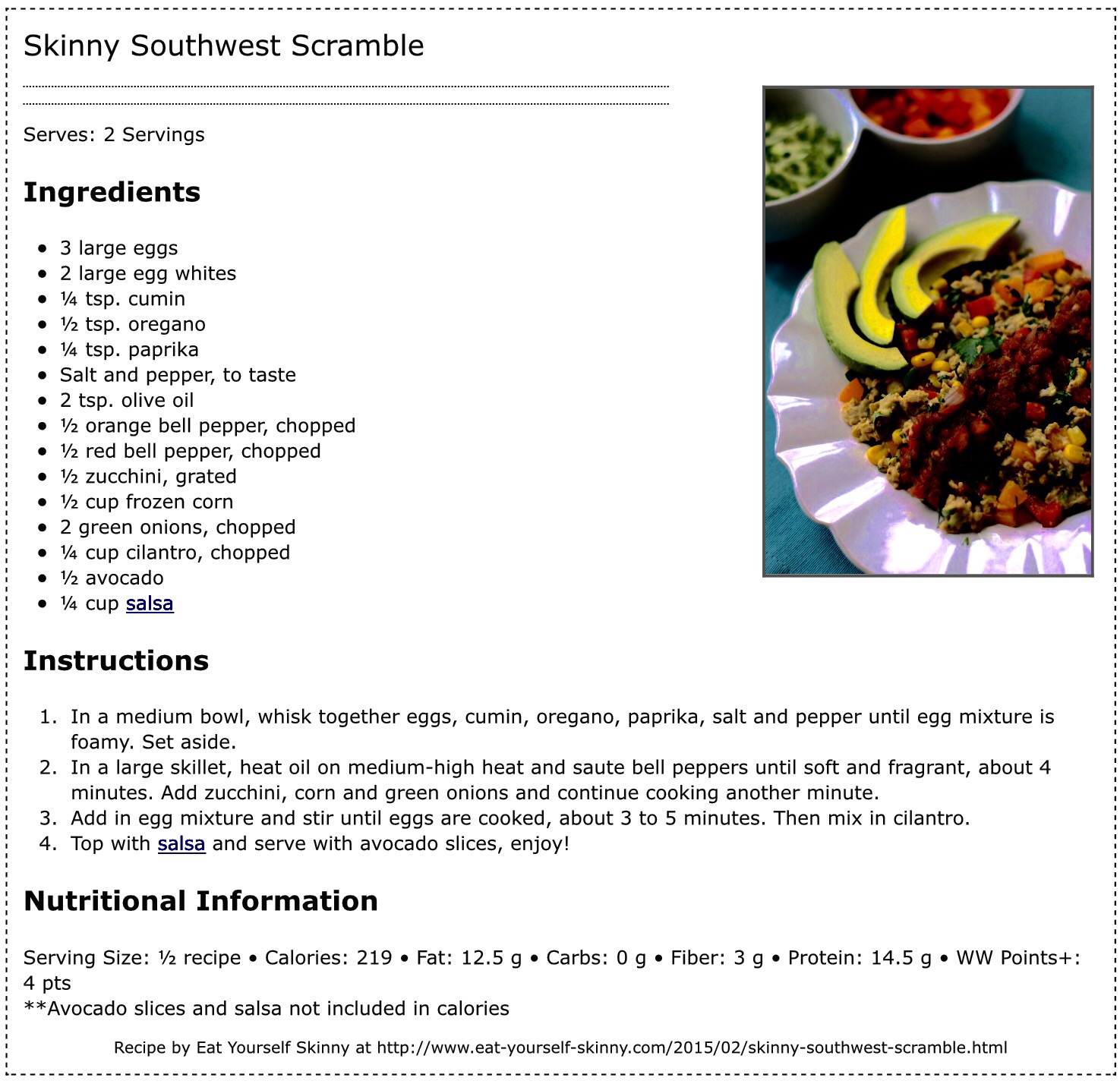
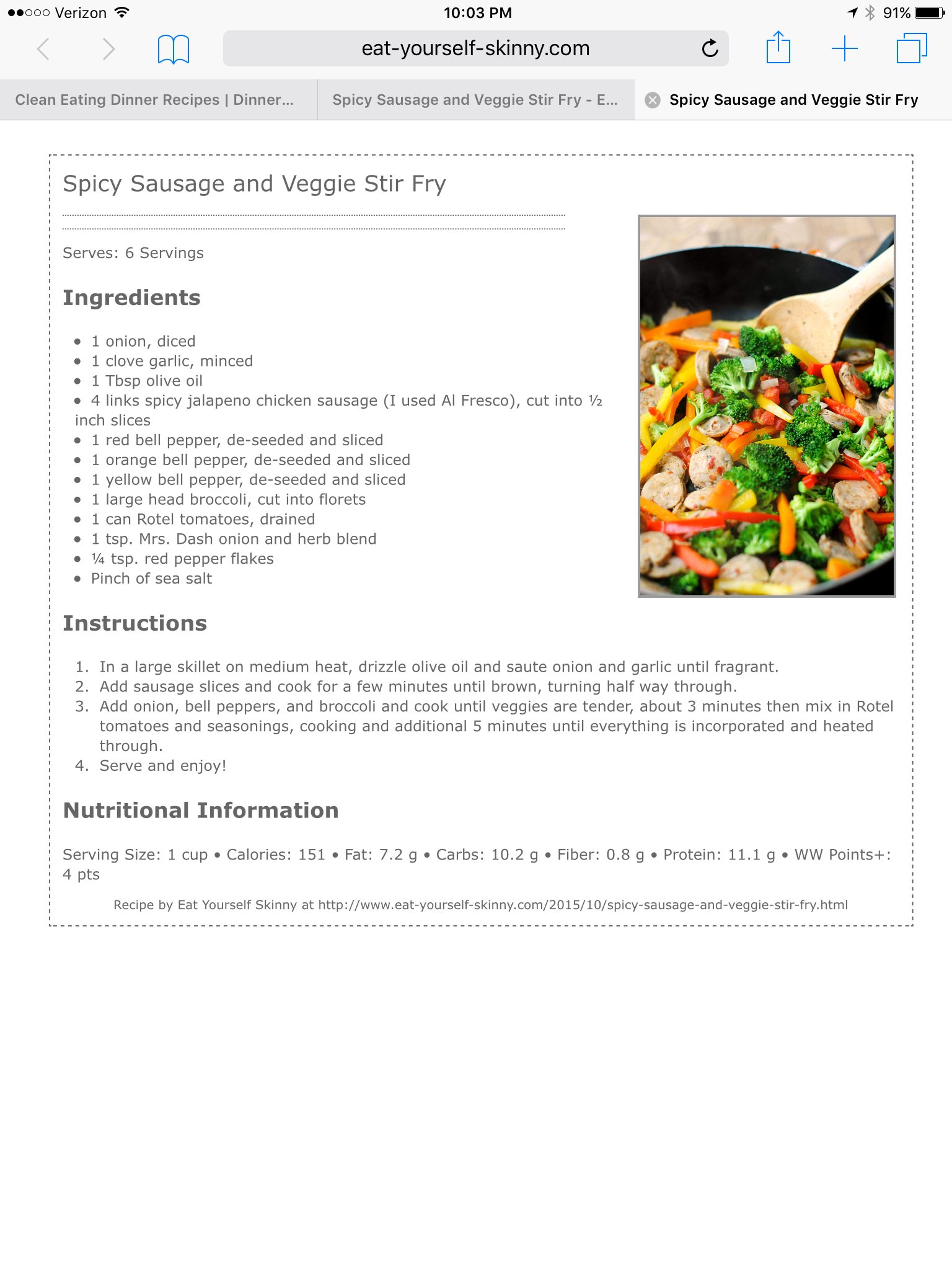
The easiest clean eating meals are made up of fresh ingredients like meat/poultry/fish and vegetables from the produce aisle. Prepared without extra salt, heavy sauces and bottled marinades, there are endless healthy combinations. It’s pretty easy to grill a piece of meat, microwave a potato and steam some veggies! But if you’re looking for something a little fancier, here are some recipes that qualify, (compliments of http://www.eat-yourself-skinny.com) Make sure you read labels when necessary!

Start slowly – Think about clean eating for one meal a day. When that becomes comfortable, look online for new ideas to incorporate!

Food Additives to Avoid

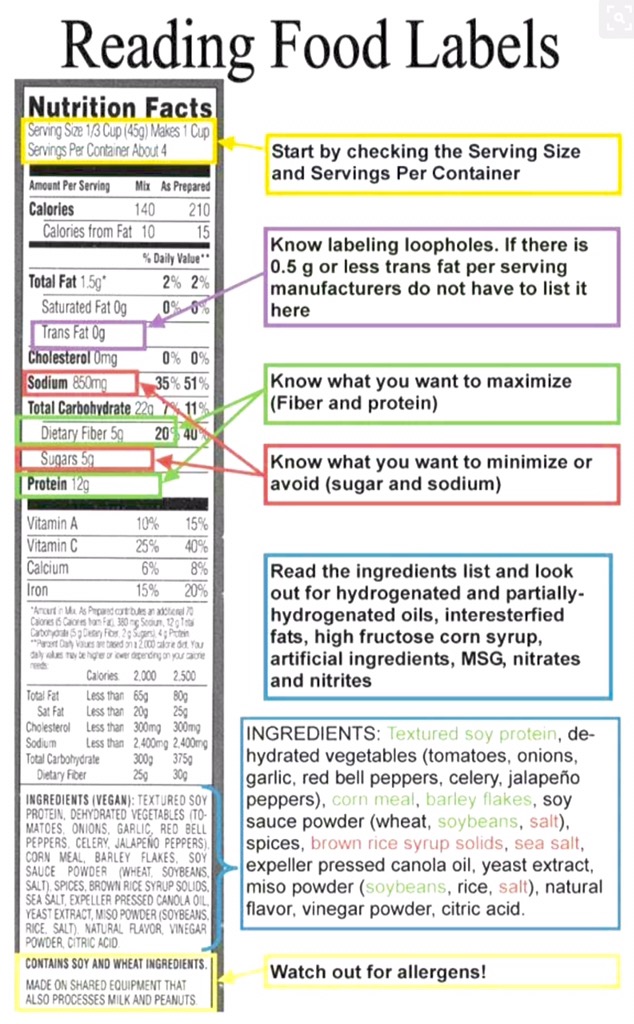
Yesterday, I mentioned reading labels. How do we know what we’re looking at and whether or not it’s bad? The fewer ingredients on a label, the better. This list makes me very afraid. Here are some things we’ll definitely want to avoid:

   Artificial Sweeteners 

           Aspartame, more commonly known as Nutrasweet or Equal. Often used as a sugar substitute in ‘diet’ foods, it is believed to be carcinogenic. Need I say more? In addition to Cancer, it has been linked to a multitude of serious illnesses.
           High Fructose Corn Syrup is found in most processed food. It has been said that it packs on the pounds faster than any other ingredient, increases your LDL (bad) cholesterol levels, and contributes to the development of diabetes.

   MSG (Monosodium Glutamate) is used as a flavor enhancer most commonly in soups and Chinese food. salad dressings, chips, frozen entrees, and many restaurant foods. MSG is known as an excitotoxin, a substance which over stimulates cells to the point of damage or death.

   Trans Fats enhance and extend the shelf life of food products and are among the most dangerous substances that you can eat. Numerous studies show that trans fats increases LDL cholesterol levels while decreasing HDL (good) cholesterol.

    Food Dyes are found in soda, fruit juices and salad dressings. They may contribute to behavioral problems in children and lead to a significant reduction in IQ. These are the worst: Blue #1 and Blue #2, Red dye #3 and Red #40, Yellow #6 and Yellow Tartrazine. Many of these have been banned in other countries due to a long list of significant health risks.

    Sodium Sulfite, a preservative used in making wine as well as other processed foods. According to the FDA, approximately one in 100 people is sensitive to sulfites in food. The majority of these individuals are asthmatic, suggesting a link between asthma and sulfites.

    Sodium Nitrate/Nitrite are used as a preservative, coloring and flavoring in processed meats, like bacon, ham, hot dogs and luncheon meat. The USDA tried to ban it in the 1970’s but was vetoed by food manufacturers who complained they had no alternative for preserving packaged meat products. These chemicals make raw meat more red. Eww.

    BHA and BHT are preservatives found in cereals, chewing gum, potato chips, and vegetable oils. They keep foods from changing color or becoming rancid. They also affect the neurological system of the brain, altering behavior and having the potential to cause cancer.

    Potassium Bromate is used to increase volume in some white flours and breads. It is known to cause cancer in animals.

What is Clean Eating?


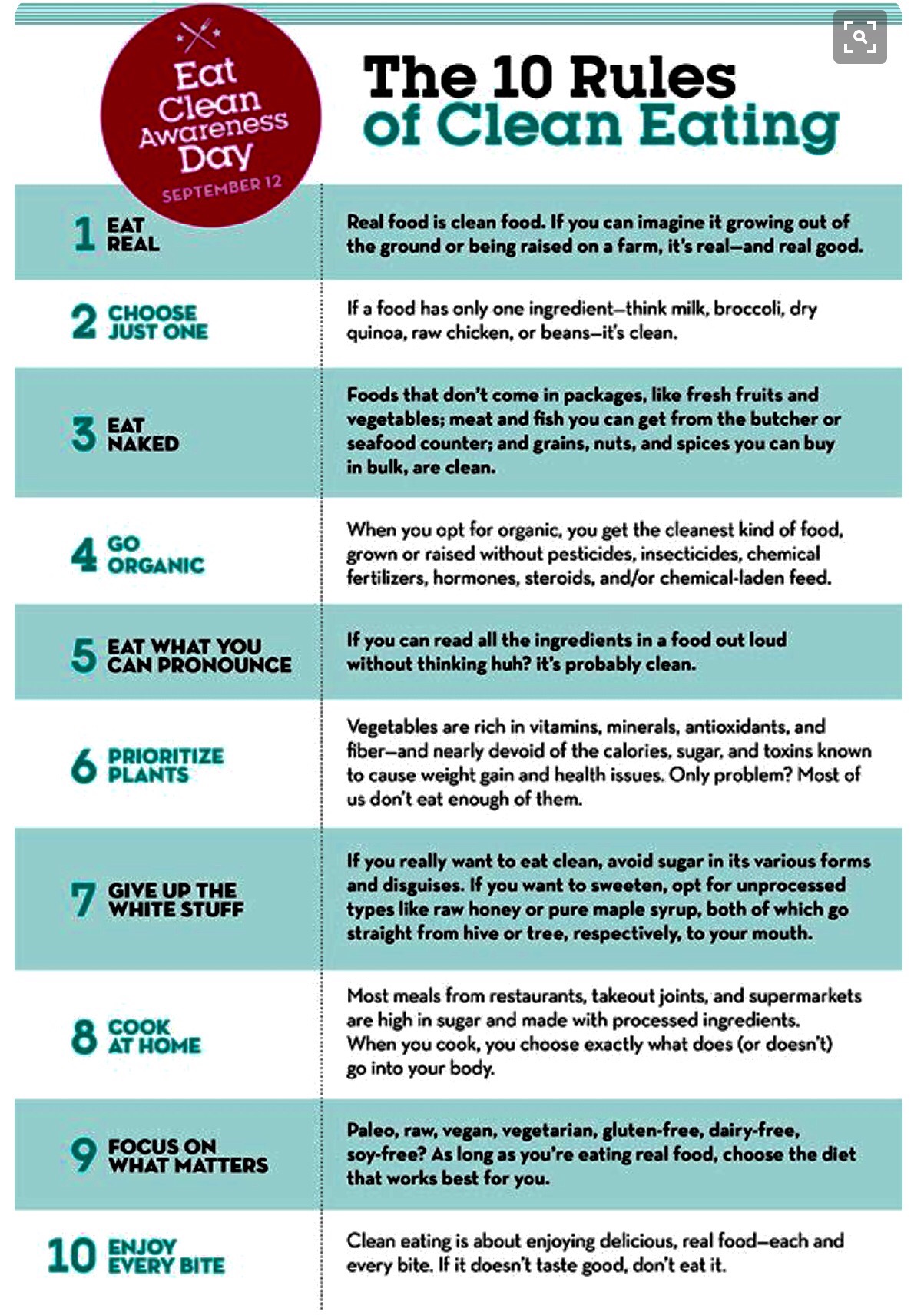
You’ve probably heard the term or maybe know someone who claims to be following such a food regimen: Clean Eating. What exactly does it mean? I read several articles, all with varying definitions and exceptions. I’ll do my best to explain it, at least as I understand it. There are things about it that make a lot of sense. Best of all, it’s compatible with just about any other healthy eating program you might be trying to follow.

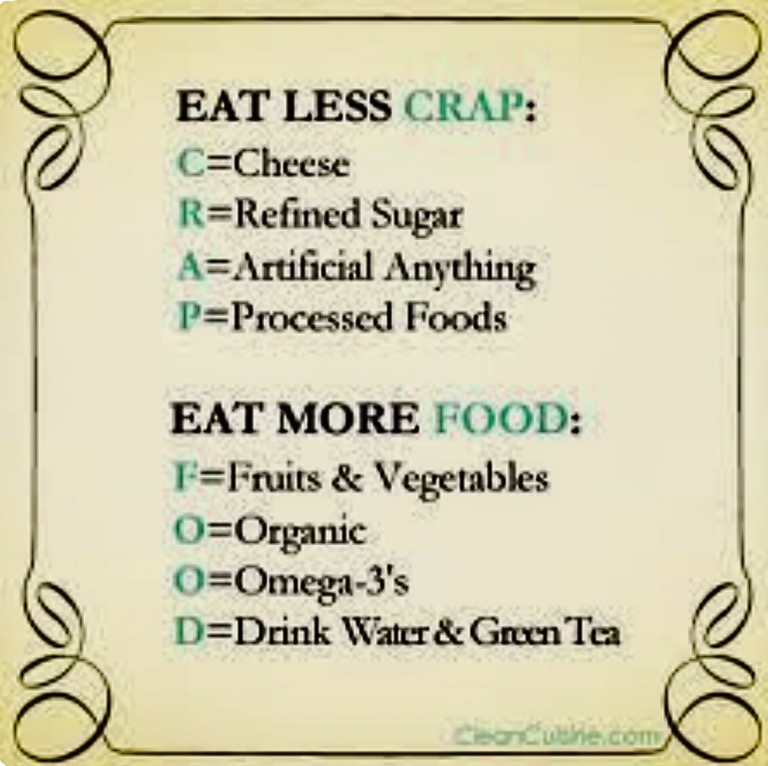
In a nutshell, clean eating means choosing foods that are not processed or are minimally processed. The sticky parts comes when you attempt to define “processed.” Picture yourself at the grocery store, with your cart. Imagine all the foods that are positioned on the outer sections of the store: Produce, meats, dairy, seafood. Most of these are acceptable. Food items that are fortified are okay – that’s an example of good processing. Most frozen vegetables and some canned ones are also good. Look at the labels for ingredients you cannot pronounce or don’t recognize. Chemicals and preservatives are a no-no. Added sugar or too much sodium- also not good. 

Confusing, right? To make matters worse, there are some other rules, too. 

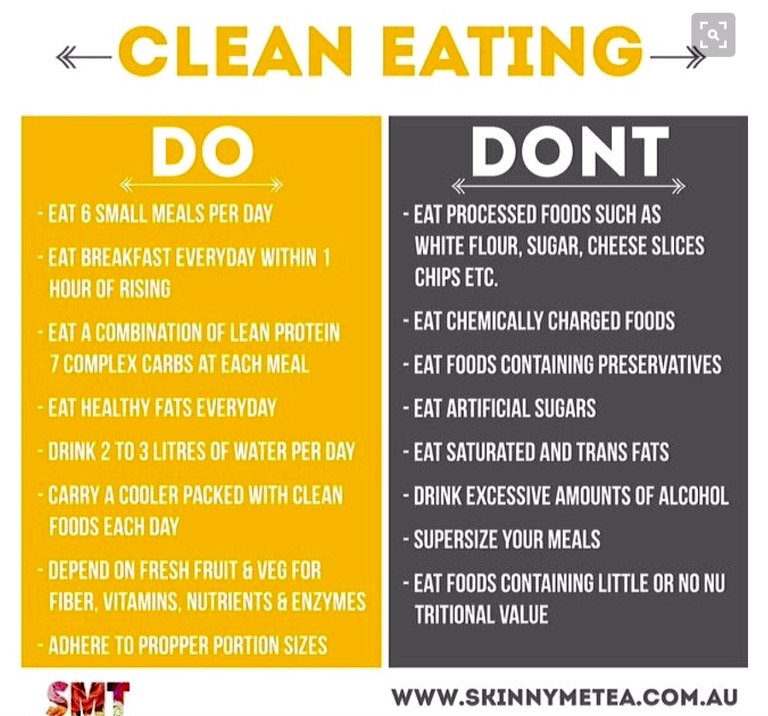
  • It is recommended that we eat five or six times daily, including three meals and two snacks. But don’t reach for the potato chips! Snacks should be a small portion of lean protein and maybe some fresh fruit.
  • Buying organic is a good way to ensure you’re getting the freshest, unprocessed food. But it’s also expensive! Pick and choose. Items like meat, chicken and eggs are a good bet.
  • Not all carbs are created equal. Consume complex carbs, like whole grains. Avoid sugar and white flour. Sorry, but that means most breads and regular pastas.
  • Eat only healthy fats and eliminate essential fatty acids.

Many of these are not news and you’re probably already aware of – if not doing – them. Here’s the things about clean eating: You can do as little or as much as you want. You can stick to a clean eating routine most of the time and really reap the benefits. Or, you can dabble in going meatless once a week. You can carry it over into other parts of your life, called clean living.

Let’s take it one step at a time. Before you reach for the tofu, we’ll take a closer look at some of the specific foods that are considered clean and maybe some simple recipes using foods with which we’re already familiar.

Tomorrow’s blog will pick it up here. Meanwhile, give some thought to how you might incorporate fresh ingredients into your regular diet. Imagine shopping along the perimeter of the grocery store. Can you get everything you need?

One more thing – Don’t forget to drink lots of water! And the good news is that most clean eating diets include a glass of red wine every day! 🍷