Spring ahead! But, why?

  
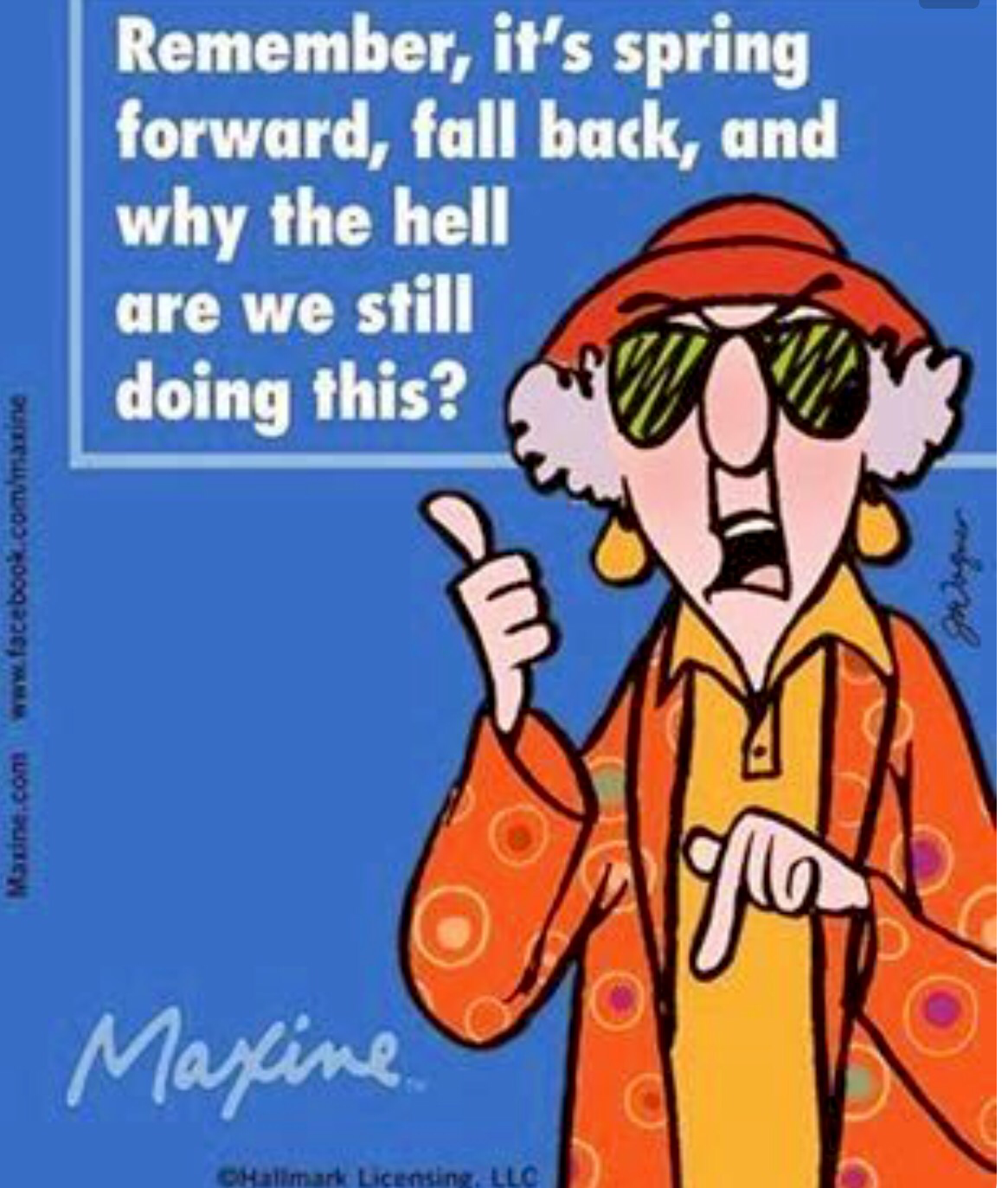
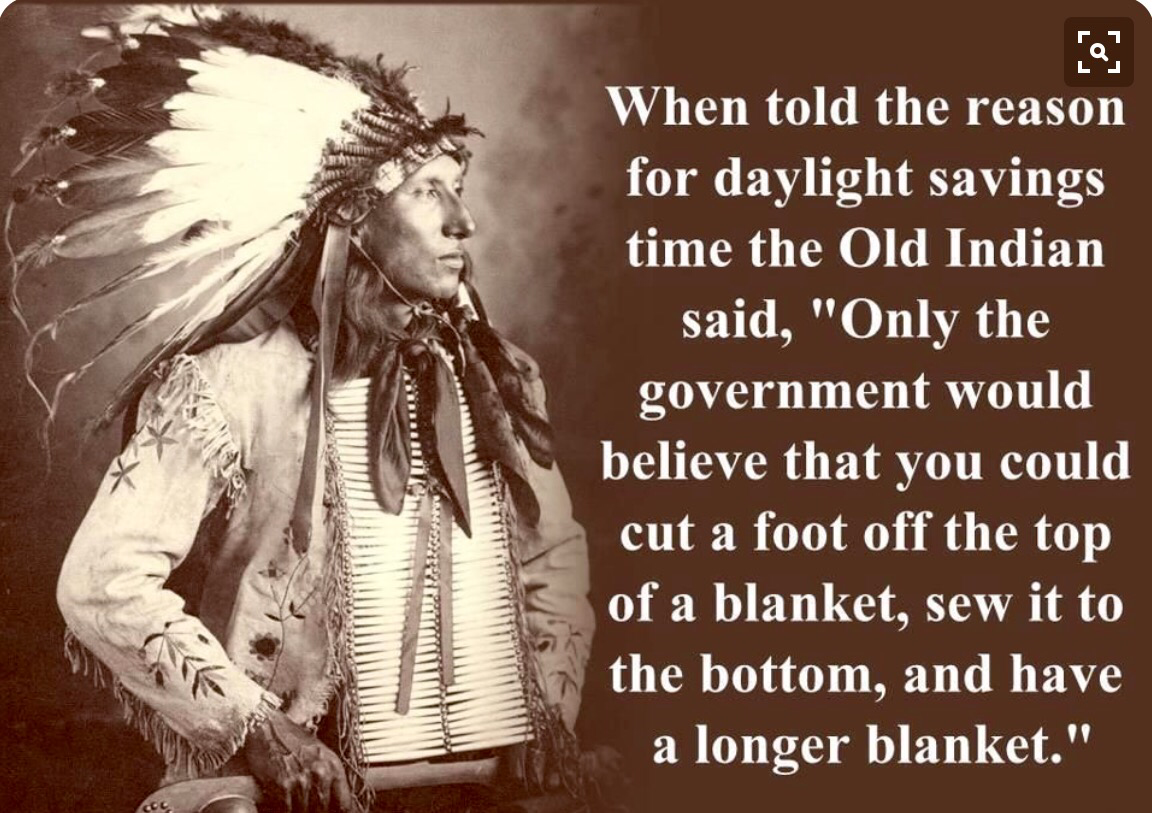
Like it or not, Daylight Saving Time starts this weekend. I am a fan, loving the extra sunlight in the evenings. If it were up to me, we’d practice DST year round. Winter is difficult enough without the gloomy darkness beginning at 4:30pm. On the other hand, I need to somehow add hours to my day, not lose one! I’m already struggling to get everything done that I want to do! So, WHY are we doing this?

As with many things, the US was late to the game of DST but has reinvented it several times. Initially started during World War 1, the purpose was to save fuel. It was temporary and we reverted to Standard Time until World War 2, when DST was implemented again. It didn’t become a permanent change until 1966, when the calendar began to switch back and forth between DST and Standard Time. Then, in 1973, we spent an entire year in DST. The system of beginning DST on the first Sunday in April and ending it on the last Sunday in October began in 1986. The rules changed again in 2007. DST now begins on the second Sunday of March and ends the first Sunday in November.

The earliest US reference to saving daylight can be found in an comes from an essay by Benjamin Franklin in 1784. He got the idea from Europe, where several countries practiced DST long before the US. Canada is actually credited with the initial idea but Germany was the first country to try it on a national level, followed by France and the UK. The reasons, even back then, was to preserve energy by needing less artificial light, even if it was candlelight. 

DST is hardly a modern concept. Ancient civilizations engaged in a similar practice and would adjust their daily routines to the sun’s schedule. Roman water clocks, for examples, used different scales for different months.

Over the years, supporters of DST have given us new reasons in support of DST. One is safety. Some people believe that if we have more daylight at the end of the day, we will have fewer auto accidents. However, studies dispute this. They’ve shown that traffic accidents, as well as heart attacks, increase in the days following the time change. Many attribute the cause of both to be lack of adequate sleep. 

When year-round daylight time was tried in 1973, one reason it was repealed was because of an increased number of school bus accidents in the morning. I’ve often heard people say that the reason for DST is school kids and bus schedules but I never knew where that originated, until now. 

I also have heard the farmers blamed for DST. In fact, farmers generally do not like the time change. They rise with the sun, regardless of what the clock says. They have to adjust their schedules to meet the needs of the community and those to whom they seem their crops.

The time change in 2007 cost US companies billions because of all the automated equipment that needed to be reset. It also put the US further out of sync with Asia and Africa, complicating things for businesses that deal with the other continents. Advocates for abolishing the time changes claim that there is no significant savings to energy – At least, not enough to support all of the disruption. During the coldest months of the year, there are many people who complain of going to work in the dark and returning in the dark. 

Whatever the reasons or whether or not we save precious energy, I know that I am looking forward to watching the sun set a little later every day, until it’s light outside until nearly 9:00am. So, until November, when we return to Standard Time, I’m going to enjoy every minute! We’ll still have the same amount of daylight – It’s just more convenient this way.
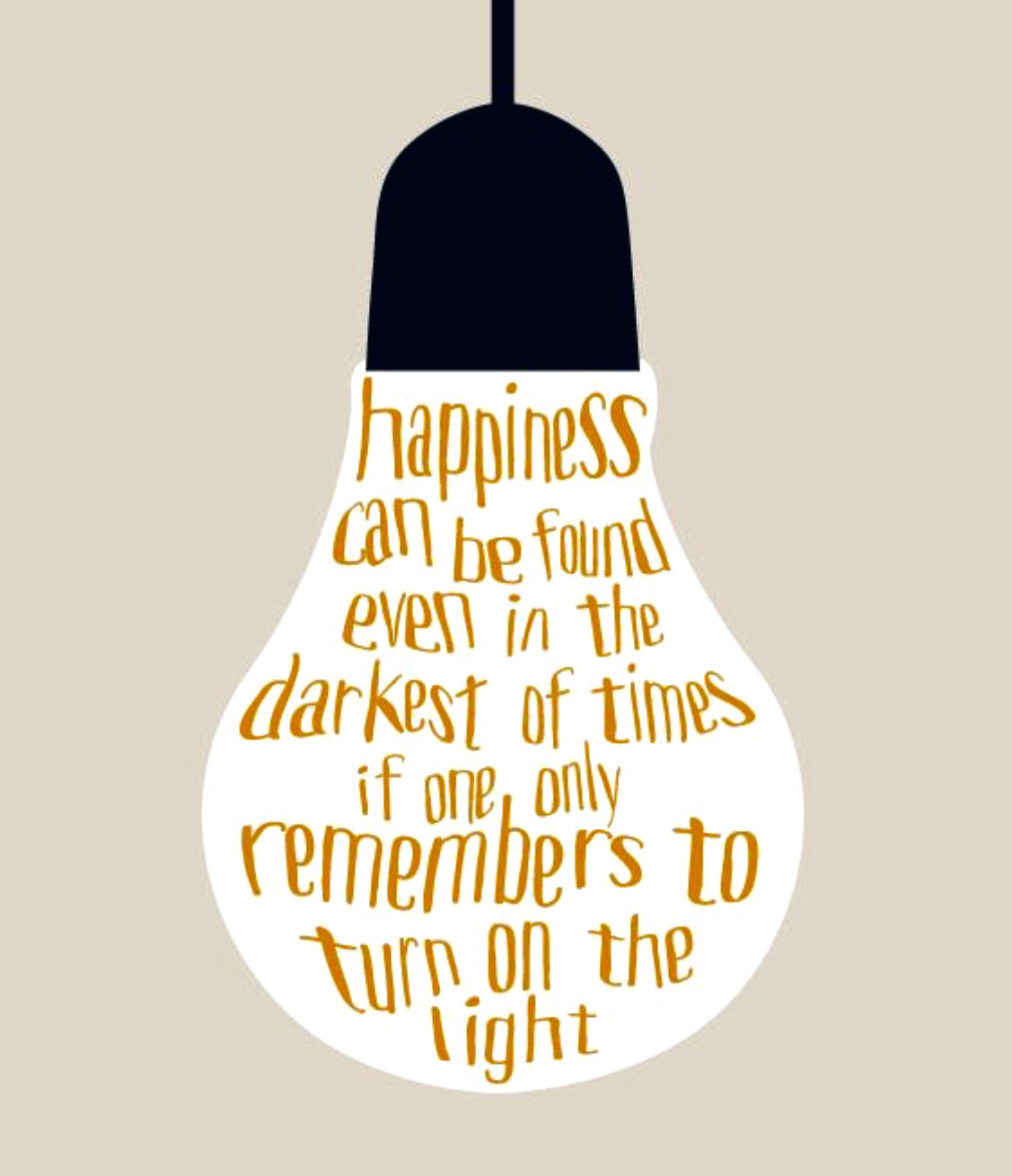
  

Be Happy

  
Someone asked me why I am so happy all of the time. I get that a lot. Often, it’s asked with an undertone of envy or even disbelief, as in, “ What the hell are you so happy about?” Other times, people offer up a reason for it, like “It must be nice not to have to work.” 

Truth be told, being retired helps. It gives me more time to do the things that make me happy. On the other hand, I was pretty happy before I retired, too. And I can think of people I know who were miserable both before and after leaving the workforce.

Instead of asking why, I thought I’d answer, “How am I so happy?” Why implies a more personal, external reason. While that is sometimes the case, I believe that being happy – most of the time – is more of a conscious effort that can be learned, if you are willing.

Love your bed. Sleep is illusive for many of us, especially women. Everyone’s needs are as different as their experiences. Fact is, the world looks very different when you’ve had the right amount of sleep. Too much can be as bad as too little. Six hours a night is optimal for me. Sometimes more, occasionally, less. I used to think that sleeping was a waste of time – that I could use those hours for more important things. However, without the right amount of sleep, the rest of the day is less productive and more of a chore. I think more clearly when my body and my mind have rested.

Make time to play. It might not happen every day. But having fun is really important. It helps keep things in perspective. You need to balance all the heavy stuff in the world with something lighter, like laughing with friends. See a funny movie, go bowling, see a comedy show.

Learn something new. No matter how old we get, there is excitement in accomplishing something you’ve never done before. Take lessons, sign up for a class, ask a friend to teach you something that they know.. There’s a certain momentum to learning: It keeps us moving forward, keeps us from becoming stagnant.

Move. You don’t have to me a gym rat or run ten miles every day (Bravo to you, if you do!) There is an advantage to feeling the connection between your body and your mind. Talk a walk, dance, work in your garden. Keep that mind-body link strong. When you push your body, something awesome happens in your head. While you’re concentrating on coordinated muscle movement, your conscious thinking is suspended and cannot haunt you with anxiety over other things. You end up with better perspective.

Do something for someone else. It doesn’t have to be an act worthy of Mother Teresa. It doesn’t have to use up your valuable time. Throughout the day, hold doors for people, offer to help lift or move a heavy object, compliment someone’s work, share your dessert. Be more aware of what people around you are doing and be helpful. It will ensure that you take yourself less seriously.

Finally, you can choose to be happy. Granted, some days are harder and present more obstacles to feeling joy. But happiness takes many forms and there is always one that’s right for the moment. It could just be a sense of well-being. It might be finding comfort. You may discover it in a small, personal triumph. Look around you – there are blessings everywhere. Allow yourself a moment to feel amazing gratitude for even small things. 

  
The world is filled with big, bad, ugliness. But happiness comes from inside of you. If you can’t find anything thing that makes you happy, create something. Try something new. Visit someone just for the sake of being with them. Offer to share someone else’s burden. Make time to do something you love. Take responsibility for your own happiness and make it happen!


Lessons from an extraordinary boy: #DStrong

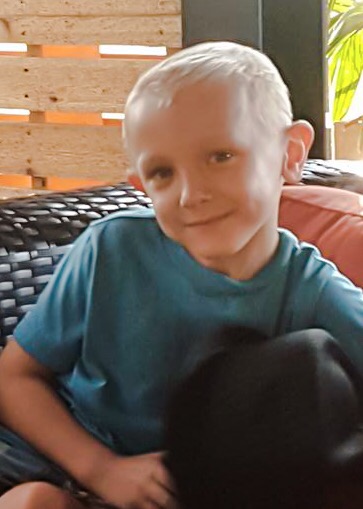
Last night, the world lost a hero. It happens a lot. But this time, he was only 8 years old. His story began in a small Rhode Island seaside town. At the tender age of 4, Dorian Murray was diagnosed with Cancer. His life, and that of his parents, became a long road of painful tests and invasive procedures. It’s likely that he didn’t remember any other kind of existence. In December, they learned that the Cancer continued to spread, despite their best efforts. With his parents’ loving support, a little boy made a very adult decision. He stopped treatment.

Asked what he wanted from what remained of his short life, Dorian wished to be famous. It started with posts on social media, like Facebook and Twitter. Before long, store marquis around New England proudly announced that they were #DStrong. Famous athletes visited the boy. Entertainers posted their pictures holding signs with the now internationally recognized #DStrong. Dorian was invited to the White House. He achieved overnight celebrity status.

It was the interviews with the child that caught my attention. In the midst of all the attention and fame, Dorian remained grounded and unchanged. While the words he used often reflected his young age, his message was anything but. In return for his notoriety, Dorian provided us with wisdom that usually take a lifetime of lessons to learn – a much longer lifetime that what he was given.

Dorian showed us how to be courageous in the face of the most devastating circumstances. He displayed a deep understanding of acceptance. Rather than fight it or allow it to darken his days, he made the most of it. He made his dreams come true. 

He gave us hope as he lived a life well-lived, in such a short period of time. Dorian may not have beaten Cancer, but it was clear that Cancer had not beaten him. He looked it in the eye and took control of what time he had left. He talked about going to Heaven, refusing to let the illness have the final word.

When he was in his final hours, his mother announced the foundation that was created in his name, to continue his legacy of bringing attention to childhood Cancer. The Dorian J Murray Foundation will provide funding for pediatric Cancer research and support to families of children with Cancer. Dorian will continue to inspire us.

In my blog, I write often about living our best lives by making decisions that reflect what’s important and what will keep us on the path to attain that which we desire. I am deeply humbled by a little boy who showed me all of that, and much more. Today, I will remember Dorian and keep his family in my prayers. Moving forward, I will honor his memory with mindful awareness of what is really important. 

Dorian was a role model for all of us: Practice acceptance. Find joy. Believe in your goals. Be humble. Don’t ever let your dreams die.

Thanks, Dorian. Rest in peace in the arms of angels, always.


Finding Forgiveness


It’s safe to say that there is no one among us who has never been wronged. We were raised by imperfect parents, had unsuccessful relationships and have had to work with all sorts of incompetent people. Our children grow up and make contrary decisions. So many opportunities for us to feel hurt, anger and regret.

No matter the size or severity of the harm – We all carry many layers that, over time, can weigh us down. Some people may not even realize how crippled they are because of it. It takes up room in our hearts that could otherwise be filled with joy. It blocks our path to mutually loving relationships. It colors our outlook every single day and influences our decisions. 

But there is hope. Because we have made a choice – consciously or not – to harbor and nurture these feelings, we can also resolve to let go of them. Depending on the magnitude of the harmful deed, it might be difficult. It may even be impossible, but still worth the insight and peace you’ll gain by trying.

First, there are some misnomers or things we believe that need to be looked at in a different light. I used to believe that forgiveness meant that the offender was sorry and desired pardon. I was wrong. Forgiveness is not about them. It’s something you do for yourself – the first step toward healing. This is especially helpful if the person who hurt you is no longer living or has been out of your life for a long time.

I always thought that forgiveness meant that the hurtful act is erased and the offender no longer bears any responsibility for it. Also false. It still happened and he or she owns their behavior. But it no longer has to own you. Forgiveness releases you from the past but it doesn’t change it.

Forgiveness does not equal reconciliation. You can decide to move forward without the resentment and anger. That doesn’t guarantee your relationship will return to its previous state. It’s only natural to want to protect ourselves from being hurt again. We might not want to re-engage with the person, on any level, and that’s okay. But what if it’s someone in our immediate family or a current coworker? Perhaps we can be at the same holiday celebration or business meeting now, without the emotional upheaval. But, you don’t have to be friends.

Some harmful acts are so egregious that forgiveness is just not possible. Even for small hurts, forgiveness requires inner strength and resolve. It might take time. Start by choosing a less significant act. Remember that you are doing this for yourself. Examine the damaging episode carefully. If you discover that you bear some responsibility, begin by forgiving yourself. That might be hardest – but it’s a great place to start.


Chili, thru the years..

  
Back in the early 1980s, my late friend Carol shared her chili recipe with me. Until then, it had not made it into my repertoire of meals. Simply, it was ground beef, a can of beans, a packet of chili seasoning and some tomato sauce. Traditional and comforting. One summer, prior to her annual July 4th party, Carol was reheating some chili, among other things, in her oven. There was a foul odor that turned out to be a singed mouse that had been trapped behind the stove. Her oldest, Jim, and I were there to witness the debacle and she swore us to secrecy, not wanting her guests to find out. Well…. We never told anyone. But, every July 4th thereafter, a little rubber mouse would mysteriously appear on Carol’s buffet table.  Often, it was perched on the rim of her crockpot of chili. I cannot make it today without thinking of her.

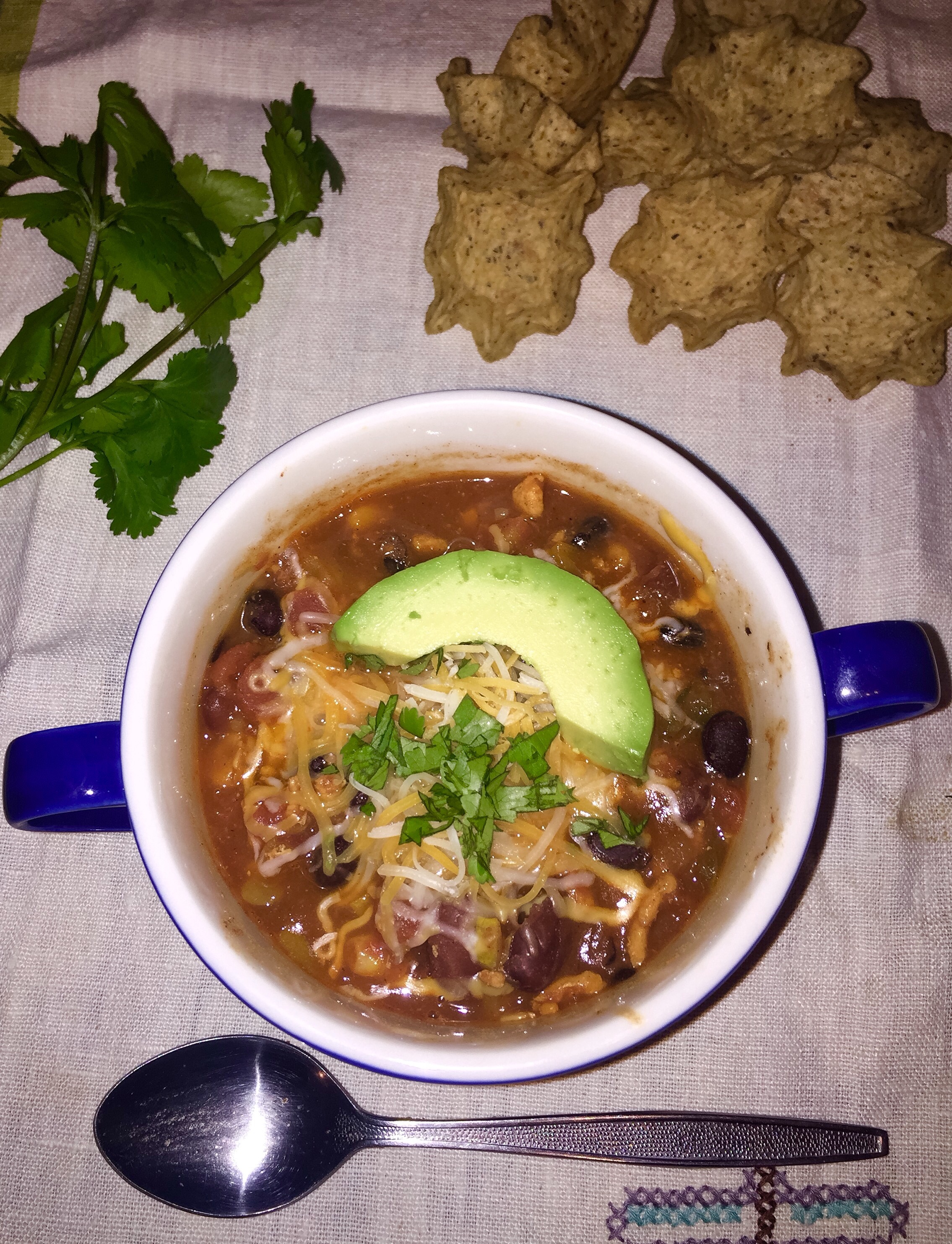
My chili recipe has evolved over the years but it’s still a favorite. We love it as much on a cold, wintry night as by the campfire in summertime. It’s foolproof, too. In August, I use farm fresh tomatoes and peppers. But cold weather chili, made from canned Ingredients, is just as hearty. Truthfully, I’m not sure that I’ve ever made it exactly the same way twice. 

Today’s chili is full of vegetables and light on meat. Two different kinds of beans provide protein and fiber, making it a more healthful version of a classic recipe. If you like it spicy, add some chopped jalapeños or crushed cayenne pepper. Mix it up with garbanzo beans or cannellini. Use ground beef or no meat at all. Add multi colored peppers. You really cannot screw it up and it’s always a hit with everyone!


Ch-Ch-Ch-Chili


  • 2 Tablespoons oil
  • 2 cloves garlic, minced

Finely chopped:

  •  A medium onion
  •  A red bell pepper
  •  A green bell pepper
  •  A small summer squash
  •  A small zucchini
  • 1-2 cups corn
  • Large can of black beans, rinsed & drained
  • Large can kidney beans, “ “ “
  • 1 pound ground turkey or chicken breast
  • 1 packet chili seasoning (low sodium)
  • Large can petite diced tomatoes
  • 2 chipotle chili peppers in adobo sauce, seeds removed & minced 
  • 1 Tablespoon Cumin (or to taste)

Serve with (optional):

  • Chopped fresh cilantro
  • Tortilla chips
  • Shredded cheese 
  • Sour cream
  • Sliced avocado 
  1. Sauté garlic, onions & peppers in oil until tender.
  2. Add squash, zucchini, corn & both beans. 
  3. Stir well & continue over medium heat for 10 minutes.
  4. In separate pan, brown the ground turkey/ chicken.
  5. Add half the petite diced tomatoes and chili seasoning packet, blending well.
  6. Combine the vegetable mixture and the meat mixture.
  7. Add the rest of the petite diced tomatoes.
  8. Add the cumin and the minced chipotle pepper in adobo.
  9. Mix well and simmer for 30 minutes on very low heat, stirring occasionally.
  10. Before serving, stir in chopped cilantro.
  11. Serve topped with sour cream and/or cheese & avocado and a side of tortilla chips


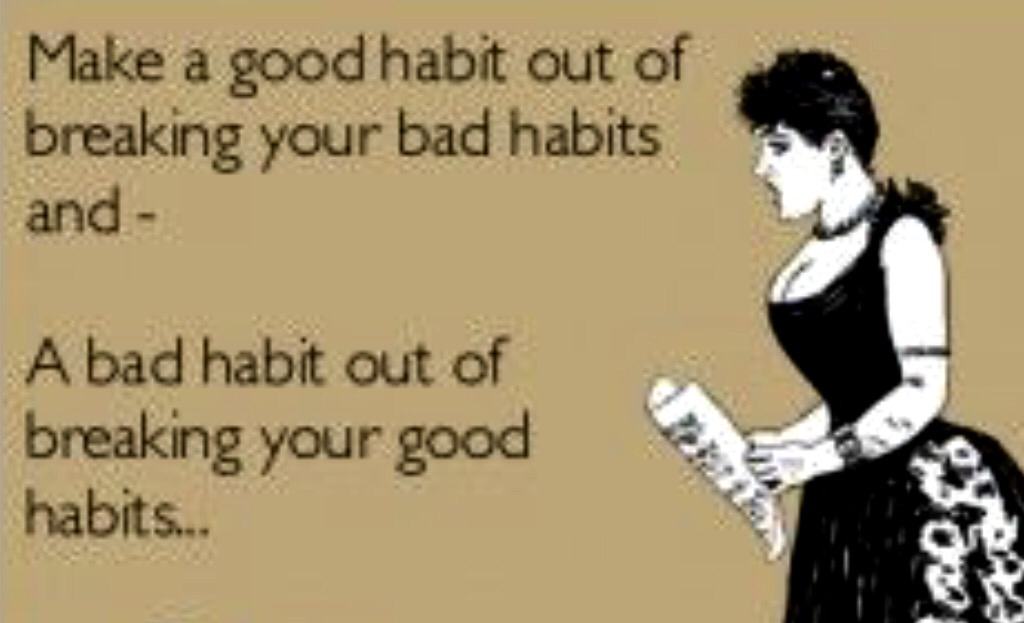
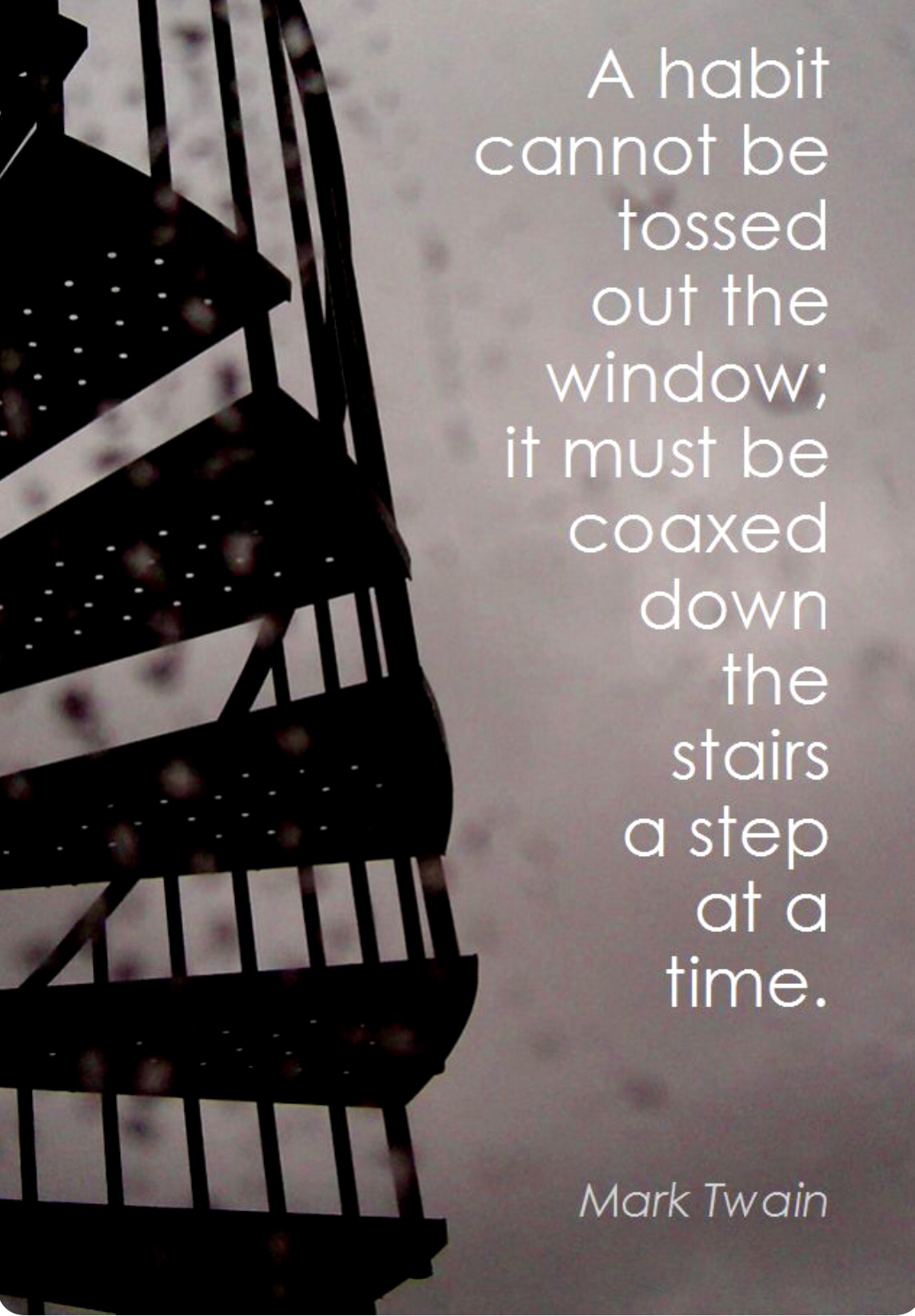
Breaking Bad (habits)

  
Umm, what? It doesn’t really need to be that confusing! 
As we embark on the third month of the year, I’m wondering how everyone is doing with their New Year’s Resolutions. Remember those? We’ve had two full months, which is way longer than most experts say is required to establish a new habit. How’s it going?

Truthfully, I’m not sure if I even recall exactly what resolutions I might have made. Usually, I am not fond of making big changes January 1st. Instead, I feel we should always be striving to live our best lives. I prefer to tweak things as I go. But there is something to be said for giving yourself fair warning – a chance to mentally prepare for the transformation – especially if it’s a big one.

What if you failed? Not possible, I say! Give yourself a pat on the back for recognizing that you need to change something! The timeframe was of your own choosing. If it didn’t work out, try again! There is no rule that says you can only set personal goals on New Year’s! Right now, we’ve got two full weeks before the first day of Spring – You can be well on your way as you welcome the new season, if you begin now.

  
Here are some ideas to help us make a change, whether it’s significant or something small. Some are things that have proven tried and true for me, while others come from psychologists and other experts in human behavior.

  1. Be realistic: Set your sights on something that is doable and set yourself up to succeed. For example, if you vow to go to the gym, don’t say you’ll do it every day, if you haven’t been once in three years! Why not start out two or three times a week? You can always add more days, once you’ve established the new routine.
  2. Build support: If you plan to quit smoking, talk to someone who has succeeded. Avoid (if you can) advice from those who have failed numerous times. Maybe you have a friend who has accomplished whatever it is you set out to do. Confide in him/her with the hopes that he/she might check in with you about it, down the road. You will be inspired by their achievement and encouraged by their positive feedback.
  3. Remember why you started: There will be times when it’s really hard and you are tempted to fall back into your evil ways. But the encouragement you need is within you! Make a list of the benefits you’ll enjoy. If you’re trying to lose weight, visualize yourself doing the activities that will come easier, like walking or hiking. When things get tough, imagine yourself after reaching your goal and use that as incentive.
  4. Celebrate small steps: Don’t wait until you’ve run a marathon, if you’ve decided to start running! Maybe you started out only able to run a quarter of a mile, but today, you ran a mile! Allow yourself to feel really good about that! Maybe even put yourself out there as a role model for someone who is thinking about running or just starting out. Becoming a role model will boost your confidence.
  5. Avoid temptation: If you’re eating healthy, keep your old favorite potato chips out of the house until you have a handle on it. If you’re dieting, don’t celebrate your weight loss by eating an entire pint of Ben & Jerry’s. Do things that will move your momentum forward and not create an invitation to relapse.
  6. Be patient: When I was working, I often met people who wanted to change their lives. Some were trying, usually against the odds. What I would tell the, is this: You didn’t get here overnight. Things will change, but it’s going to take some time before it comes easily. Experts say three weeks. I think it depends on how big the change is, your personality, strengths & weaknesses, support system, etc.

One of my New Year’s resolutions was to start this blog. In the beginning, it felt awkward and cumbersome. Now, I cannot really relax or get on with my day until it’s done. It has become a part of who I am and I really look forward to it. You might say that it’s a habit – A good one! 

2016 has only just begun. Spring is almost here. Whether you make that change or not, the time will pass anyway. Set your sights forward and give yourself another chance. 


Path of Least Resistance


Have you ever had one of those moments when things do not go the way you expected? I don’t know about you, but I often become frustrated and indulge in some pretty negative self-talk. It might go something like this: “Oh, great. Now I’m not going to get X done and this is the only time I could do it. I should have X done by now and I should be doing Y.” Notice that pesky little word, “should.” Is it friend or foe?

Motivation is a good old thing, right? Being planful leads to production. Imagining yourself accomplishing a task results in reaching your goal. Focus!

But, how much control do we actually have over our circumstances? Can we really create incentive where there is none and then call upon it at will? Or… Is there something bigger at work? 

I think maybe there is such a thing as trying too hard. Beating myself up over what I should be doing or that thing I should have finished by now can be counterproductive, not to mention downright destructive! What if, instead, we were to have no expectations? Think about the sun. It doesn’t try to shine – It just happens. Like the ocean, perhaps we need to rise and fall like the tide, effortlessly. When things do not go the way we think they should, what would happen if we simply let it be and opened ourselves up to whatever was happening, instead? What if we chose a path of least resistance? 


Recently, I attended a scheduled group writing event at a local coffee shop. Before hand, I envisioned three or four of us, sharing space at a table and furiously writing the afternoon away. I was looking forward to getting a piece started that I plan to submit for consideration in a local authors anthology. So focused was I on what I should do, I arrived early, scoped out a comfortable seat and grabbed a cup of tea. The usual players did not show up, but I started writing. About twenty minutes into it, a newcomer arrived. Not understanding the group format, he was not prepared to write. Rather, he produced a manuscript and was seeking feedback. I was a captive audience. Not wanting to be rude, I pretended to peruse his article (what else could I do?), all the while, thinking how I should be writing. I fought an inward urge to flee, seeing the development as a hindrance. 

I decided to give this guy the attention he sought. He had driven 45 minutes to get there. His writing was interesting, making a case for the coexistence of science and spirituality. As he spoke, it became obvious that he was a very complex person with intriguing life experiences. There are things I could – and did – learn from him. Then, he returned the favor, inquiring about my own writing and giving me a chance to vent my frustrations about getting published. He offered support and encouragement in a way that only someone who has been there can do. Then, he shared his own experience of getting published.

On the drive home, I lamented over my lack of cohesive writing that afternoon. Mentally, I wrote a new outline for the story I was working on – one that will be far better than what I already had. Later that evening, I received a message from my new friend via the group’s webpage. When I introduced myself, I had not given my last name, which he learned from the website. His mother’s maiden name was Whitman and he offered to share some genealogy information regarding Rhode Island family, joking that we might even be related. My husband recently made an effort to trace some of his roots but quickly became frustrated. Maybe this guy could help!

The following day, still disappointed about my lack of progress, I decided to attend another group writing event, at the Providence Athenaeum. Upon arriving, we were met by a staff member who invited us to attend a free seminar this weekend that features prominent literary agents talking about getting published! There would be a Q & A reception afterward, with wine. Needless to say, I was in!

Now, had I not opened myself to the change in circumstances, I would have a hastily written story, badly in need of revision. I would have missed the opportunity to compare notes with a possible distant relative. I would not have been stimulated by the science-spirituality connection. And, I would never have gone to the Athenaeum to learn about the seminar.

What’s it all mean? The universe gives us what we need. But we have to learn to recognize it. We have to be open to it – and not resist it. What would happen if we saw obstacles as opportunities? Sometimes, we need to take a different path – a longer way around – to get to where we are going: To find the lesson. That’s called life.

The next time you find yourself resisting the moment because it’s not going the way you think it should, open yourself to the possibilities. Go with the flow, as they say. You will be amazed. 


What if…?


Have you ever really thought about how you would spend the final days of your life, if you knew that’s what they were? Most of us have been asked the question, whether hypothetically or in a song: What if you had one year to live?

The first things that come to mind, for me, are dreams that have existed for most of my life that have not been fulfilled. I’d travel to England to see the places where my grandparents lived. I’d publish a book. I’d see the aurora borealis. Of course, these things require time and money. Ironically, when faced with a definitive, limited quantity of each, they would likely become more accessible. 

So much for the obvious, external things I’d do. What of the important stuff? What about my inner life? How would that change in the final months? Think about your legacy and how you would be remembered. With each precious day, I would need to tell those close to me how much I love them. But more than that, I’d wish for them to know, specifically, why and how they had made me happy: Things they had taught me. How they had impacted and changed my life. I’d hate to leave without them knowing these things.

Next, I would seek out those who had harmed me or with whom relationships had ended somehow – Perhaps somebody who felt betrayed or disappointed by me. Then, I would do the same exact thing – Tell them how they had influenced me or made my path easier…. Recognize how grateful I was to have known them. The painful parts would be forgiven because it would no longer matter. 

I would be free. All of the negative energy I harbor would be released – Some of which I didn’t even realize I carried. Without the bold assumption that we have time, things become crystal clear. Fear ceases to rule the way we live our daily lives. Things we push to the back of our consciousness are no longer content to simmer there: They must be addressed. 

I think that I would even make peace with my regrets. Knowing that life was finite, accepting that some things just simply cannot be changed would be the only option. Forgiving others would be the easy part, compared to forgiving myself. But I think I could do it.

And my worldly possessions? All this “stuff” with which I have been struggling? Ha! Imagine the joy it would bring to give it away and know it was being used or appreciated by someone else – perhaps someone who really needs it!

I would face death in a purely genuine way, free of trepidation or pretense. Without the weight of fear and regret, I would experienced the true lightness of being! What a way to go! 

Does anyone else find it absurd that we might face death in such an authentic way? What about the way we LIVE? After all, we have more control over our lives than our deaths. At least, we have today – this moment – to begin to get it right. Why squander all that freedom and light on death? If it’s worth doing then, shouldn’t we be doing it right now? 


Worth swimming upstream!


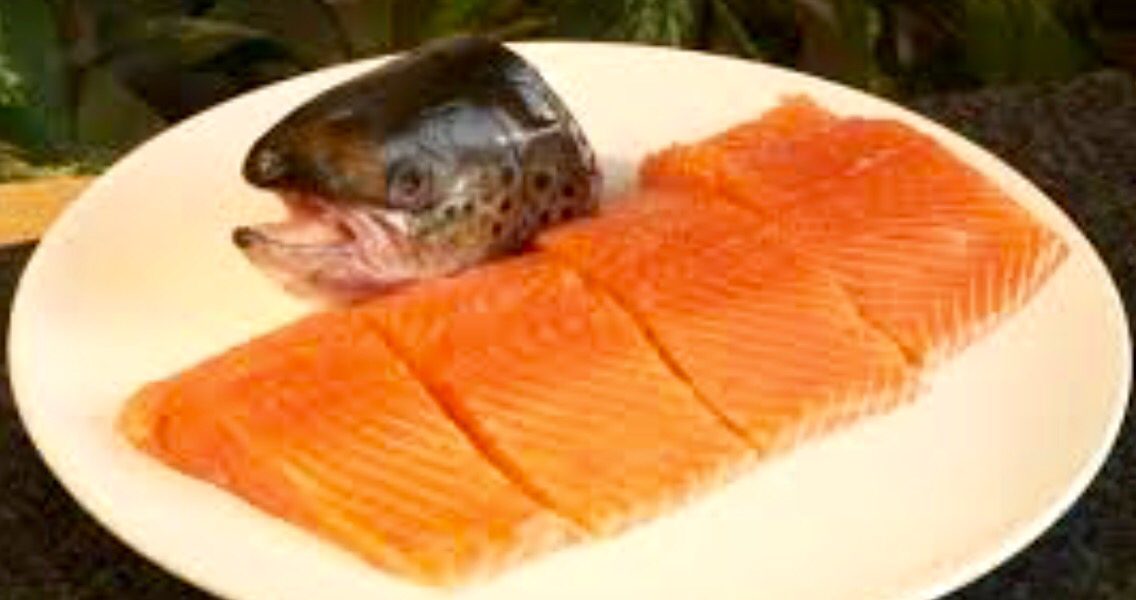
Recently, my friend, LouAnn, served Salmon Chowder. It was delicious! I got to thinking how versatile salmon is. This pink fish has gained enormous popularity in recent years. But, it can be confusing: Wild caught or farm grown? Sockeye or Chinook? Alaskan or Atlantic? I looked around and here’s what I found.

Salmon is found in both fresh and saltwater. There are several species of salmon, including sockeye, pink, coho, chum, chinook, and Atlantic. Salmon can be baked, broiled, seared or grilled. It has a reputation for being among the most heart-healthy of dishes because it contains Omega 3 fatty acids. These are essential fatty acids that our bodies cannot produce, therefore it requires intake from food (or vitamins) to supply the nutrients. Omega 3 is credited with promoting healthy joints and skin, reducing the risk of heart disease and aiding in neurological development in unborn children. Atlantic salmon has the highest concentration of omega 3 in the salmon family. The American Heart Association recommends that adults have two servings of omega 3 per week. According to the World’s Healthiest Foods, omega 3 improves heart muscle function and reduce es the risk of deadly heart arrhythmia.

A 4-ounce serving of salmon contains contains up to 58 percent of the daily required protein, as well as essential amino acids that promote growth and help maintain muscle tissue. The protein helps the body maintain metabolism at levels that promote weight loss. Eating salmon three or more days a week helps you feel full longer. 

That same fillet will give you nearly half of your daily vitamin B-12, in addition to niacin, vitamin B-6, thiamin and pantothenic acid. It provides more than 50 percent of your recommended intake of selenium, fighting heart disease, cancer, age-related mental decline and thyroid disease (according to the National Institutes of Health). The same serving of salmon also delivers 25 percent of your daily phosphorous. MedlinePlus.com reports that phosphorous has many benefits, from building strong bones and teeth to maintaining a healthy heart and kidneys.

Contamination from mercury, pesticides, and other pollutants has become a concern, but there are still salmon runs that pose relatively low risk, including wild-caught Alaskan salmon. Southeast Alaskan chum, sockeye, coho, pink, and chinook salmon, together with Kodiak coho, pink, and chum salmon have also been found to be the lowest risk category of wild-caught salmon. Some salmon runs from British Columbia and the U.S. West Coast also stand out as lower risk for contaminants, but are more unreliable in terms of sustainability. There are four criteria: The inherent vulnerability of the fish, effects of fishing on overall habitat, status of wild stocks, and the other types of fish that are caught unintentionally during salmon fishing.

The debate over wild-caught vs farm-raised is more complicated. Advocates of sustainable food argue that farming creates an unnatural habitat for fish, which compromises quality. Regulations prohibit the use of animal by-products for feeding land animals, but this part of certification for farmed fish has been controversial. When salmon migrate out to sea, many different types of fish comprise their natural diet. So, it seems appropriate to allow the feeding of fish oil and fishmeal from wild fish to farm-raised salmon. However, non-organic animal by-products in their diet is believed to increase the risk of contamination. Farmed salmon accounts for about 80% of all salmon consumed worldwide, so it’s not always easy to find wild-caught salmon.

Fresh salmon is available whole, as steaks or in fillet form. It can also be purchased frozen, canned, dried or smoked. A whole fish should be kept buried in ice, while steaks and fillets should be displayed on top of a bed of ice. Most residential refrigerators are not quite cold enough for maximum freshness of raw fish. If you’re not going to prepare it right away, place your well wrapped fillets on a baking dish filled with ice in your refrigerator.

Unless you buy certified organic or wild-caught Alaskan salmon, it’s best to remove the skin. While it may contain some of the healthy nutrients, it’s also going to contain the majority of pollutants. 

My favorite thing about salmon – besides the taste – is that it is easy peasy to prepare! There are seemingly a million ways to enjoy it! For optimal health benefits, simply broil it (be careful not to char it, even at the edges). You can whip up and endless array of sauces (or buy one, like sweet chili sauce or teriyaki). Salmon seems to be delicious with just about anything, whether you prefer spicy or sweet, buttery or plain. Serve broiled salmon over pasta, topped with olive oil, dill, lemon, scallions and black pepper. Combine leftover, cold salmon with greens for a delicious salad. Replace your usual shellfish or haddock with salmon in a chowder! Ground salmon makes a great “burger” alternative! Sprinkle left-over Salmon chunks with taco seasoning and use on Taco Tuesday!

One of the best salmon dishes I’ve ever eaten was grilled with a simple sauce of butter and chopped parsley! You literally cannot ruin it.

  
Weeknight Baked Parmesan Salmon

  • Salmon fillet, about 2 pounds
  • 3 cloves garlic, minced
  • ¼ cup chopped parsley
  • ½ cup shredded Parmesan cheese
  1. Preheat oven to 425
  2. Place whole fillet in baking dish lined with parchment paper (or foil) for easy clean-up
  3. Cover fish with a piece of parchment (to prevent drying) and bake for 10 minutes
  4. Remove top parchment and spread mixture of garlic, parsley & cheese over fish
  5. Return to oven and bake until top is browned and cheese is melted (or 135 degrees internally)


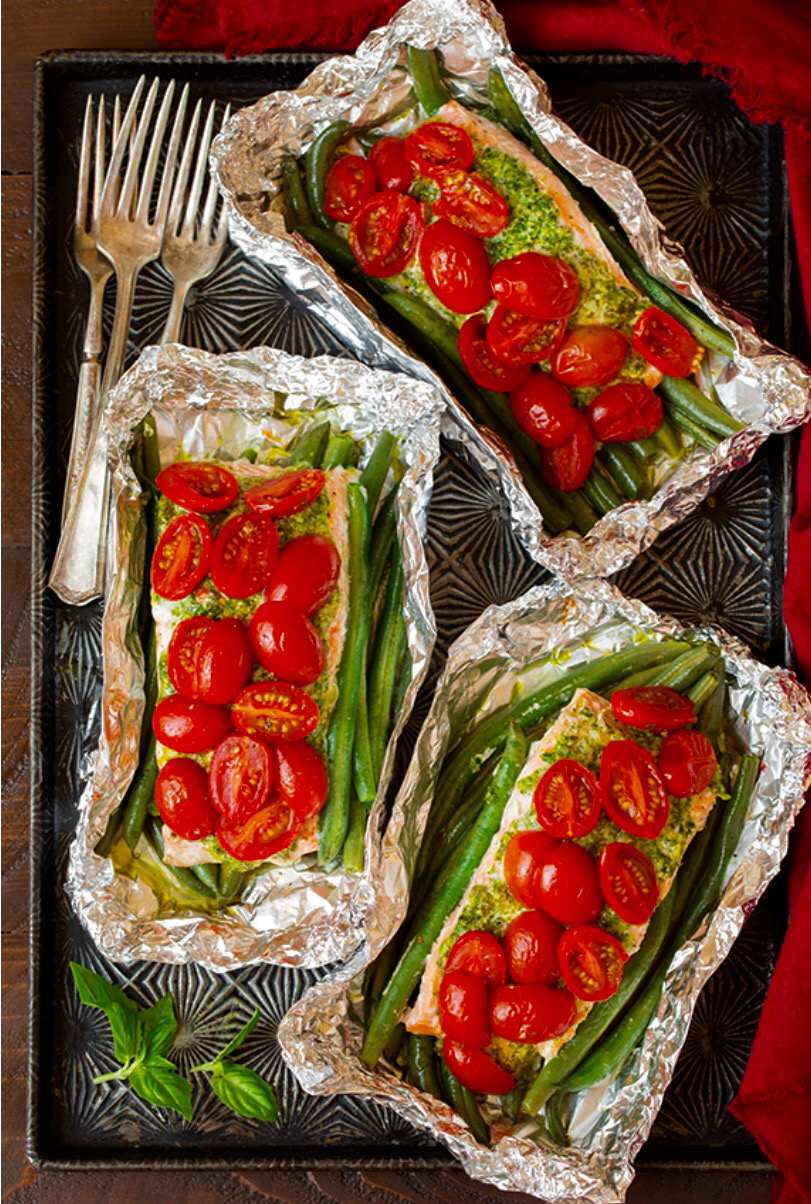
Pesto Salmon with Italian Veggies Foil Packets

  • Salmon fillets, skinless, individual serving sized (about 6 ounces)
  • Asparagus or green beans, trimmed
  • Pesto, store bought or homemade
  • Grape tomatoes, halved
  • Olive oil
  • Lemon juice
  • Aluminum foil
  • Cooking spray, like PAM.
  1. Preheat oven to 400.
  2. IF using green beans, parboil or steam them first (3 mins). 
  3. (Asparagus does not need to be pre cooked).
  4. Spray sheets of foil, about 14 inches each, with cooking spray. 
  5. Divide beans or asparagus among foil sheets, placing in center.
  6. Place salmon fillet on top.
  7. Spread pesto over Salmon 
  8. Top with tomatoes and drizzle all Ingredients with oil and lemon juice.
  9. Fold foil up and crimp edges. Leave a small, lose seam on top for steam to escape.
  10. Bake for about 25 minutes, depending on thickness of fillets.
  11. Allow to stand 5-10 minutes before unwrapping.


Easy Salmon Burgers

  • 1 pound salmon fillet
  • ½ cup Panko breadcrumbs
  • 1 egg, slightly beaten
  • ¾ cup finely chopped bell peppers (red and yellow look pretty)
  • Ground Chili pepper, to taste
  • Cooking spray, like PAM
  1. Remove  skin and mince salmon.
  2. Mix with rest of the ingredients.
  3. Form into patties.
  4. Cook in a sprayed grill pan, turning as needed, until cooked thru – about 4 minutes each side at medium-high heat

(Serve with Chipotle Mayo or your favorite dipping sauce!)

Look before you Leap!

  
This morning, my eight-year-old grandson asked me why February only has 29 days every four years. Since I was driving at the time, I couldn’t Google it and then impress him with a grandparent’s endless knowledge and wisdom. Instead, I had to wing it and rely on what little I remembered about leap year. When I got home, I did, indeed, Google it. As it turns out, I am the one impressed. It seems I was right. Well, mostly…..I lacked a few details. But it’s pretty interesting stuff!

We all know that it takes the earth one year to complete its orbit around the sun. But, it’s not exactly 365 days. It’s actually 365.2422 days. So, every fourth year, we add an extra day to keep the calendars and clocks in sync. We follow the Gregorian calendar – But what does that mean?

Originally, the Roman calendar had 355 days. Every two years, there was an extra month with 22-days. When Julius Caesar became emperor, he ordered his Royal astronomer to create something different. It was decided that a 365-day year, with an extra day every four years, was better. In 46 BC, Julius Caesar created the calendar system that closely resembles the one we still use today. 

500 years later, Pope Gregory XIII’s astronomers decided the calendar needed to lose three days every 400 years, in order to keep things even more accurate. They introduced the Gregorian calendar in 1582.

The reason that February was chosen is interesting! According to the Julian calendar, under Julius Caesar, February had 30 days and July – the month named after him – had 31 days. August had only 29 days. When Caesar Augustus became Emperor, he added two days to ‘his’ month to make August the same as July. So, February lost two days to accommodate his ego. 

Technically, Leap Year does not fall every four years. There’s a leap year every year that is divisible by four, except for years that are both divisible by 100 and not divisible by 400. For example, The year 2000 was a leap year, but the years 1700, 1800 and 1900 were not. This fix was added because an extra day every four years proved too much of a correction.
Personally, I am always blown away at the knowledge of astronomy the Romans had, all those centuries ago.

Leap year is also a customary time for a woman to propose marriage to a man. This custom likely began in the 5th Century, when St. Bridget, an Irish nun, complained to St. Patrick that women had to wait too long for the men to propose. St. Patrick allegedly appeased her by giving women the chance to propose every four years.

  
In Denmark, a man who turns down a proposal must give the woman 12 pairs of gloves. In Finland, the penalty is fabric for a skirt.

Other Leap Year tidbits:

  • The Summer Olympics are always held in a leap year. This year, they take place in Rio de Janeiro, Brazil.
  • US presidential elections are held in a leap year.
  • In Greece, people avoid getting married in a leap year, believing it is bad luck.
  • If you work for salary, today is one more day’s work than you are being paid for!

Whatever the tradition, one thing is certain: We are blessed with an extra day this year. Make of it what you will!