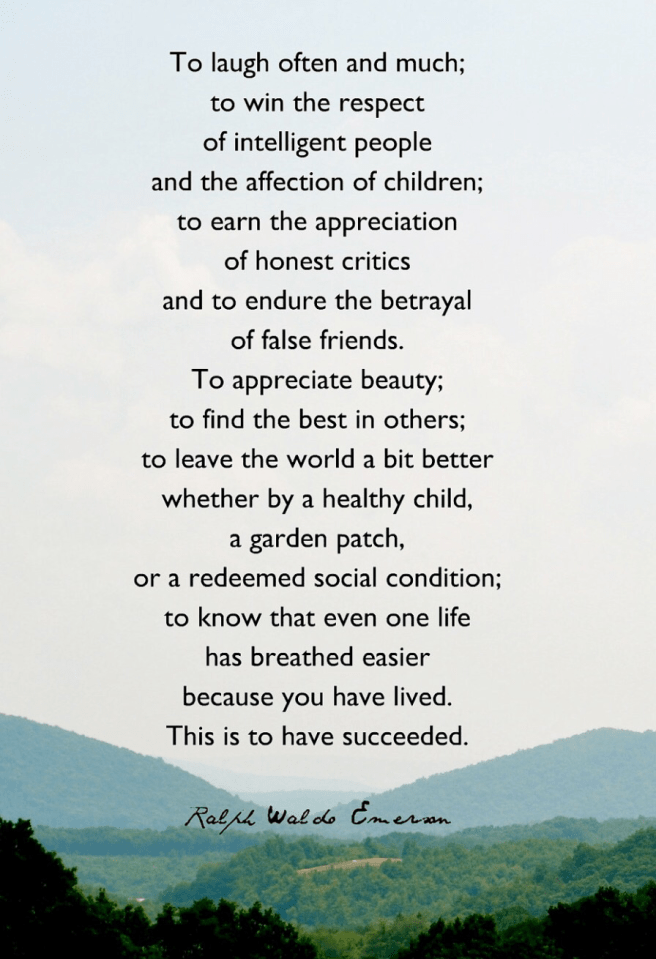
Who might you become?

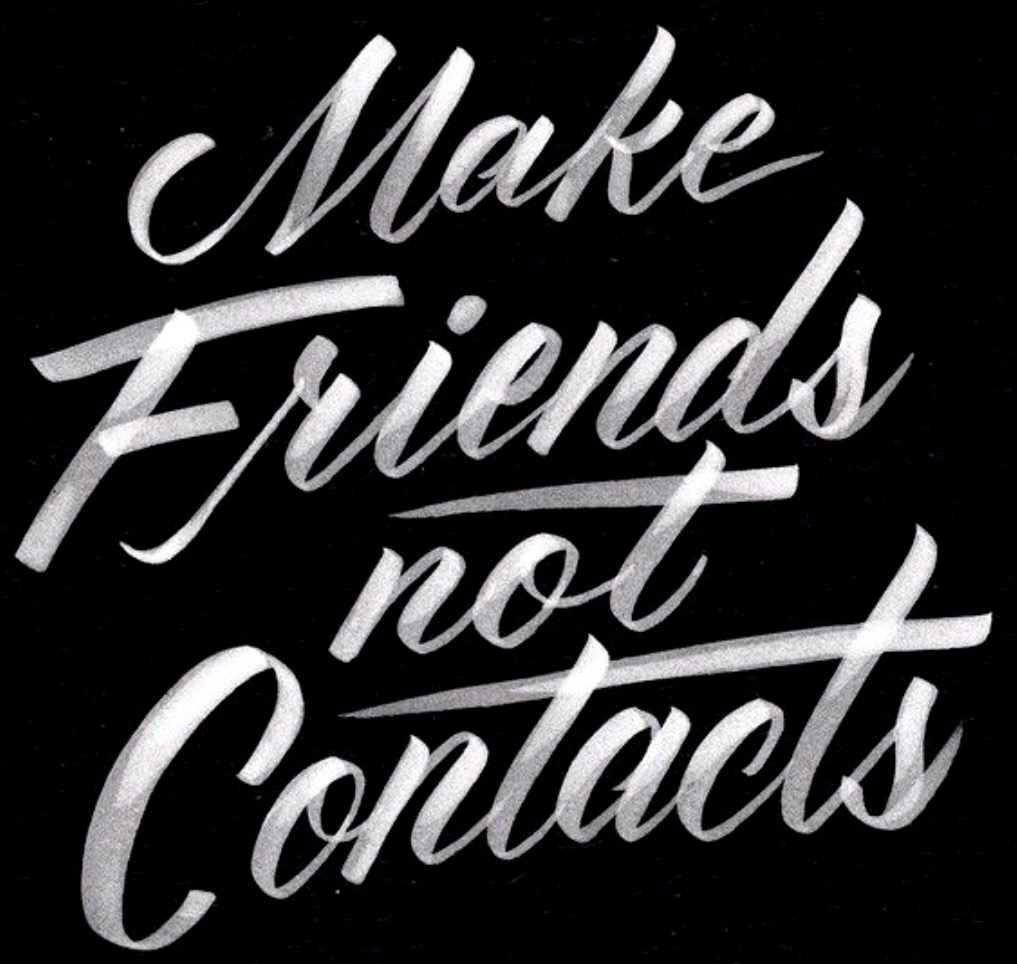
Remember when you decorated your bedroom walls with posters? Maybe you were a teenager or in college. Some were photos of your favorite band, no doubt. Others were quotes from popular films. I had one that said “Love means never having to say you’re sorry.” Love Story- The book and later, the movie – was a favorite back then. (I had no idea what it meant, at the time.) There was a famous Farrah Fawcett pin-up for the guys and a pantless Burt Reynolds for the girls. We used our walls as a means of announcing who we were or, more likely, who we wanted to become. 

Somewhere along the way, we tore down our posters and invested in some real art. Portraits of our children were given priorities. Before digital cameras and computerized printing programs, we dressed up the kids and took them to places like Sears or Olan Mills, where they’d be posed in front of a fake background and photographed. 

Today, my walls are mostly covered with photographs that I’ve taken. There are a few family pictures and a gallery of grandkids on display. There are also a few pieces of needlework. Then, there’s my little corner where I play music and sometimes write. Both pastimes are high on my list of priorities these days, so I’ve carved a small space for myself. Even though I am passionate about my pursuits, they can be frustrating and overwhelming. During one particularly discouraging day of practicing the fiddle, I asked myself why. “I don’t have to play the fiddle,” I thought. “Why on earth am I doing this to myself?” The same goes for writing. Nothing bad will happen if I stop, right? 

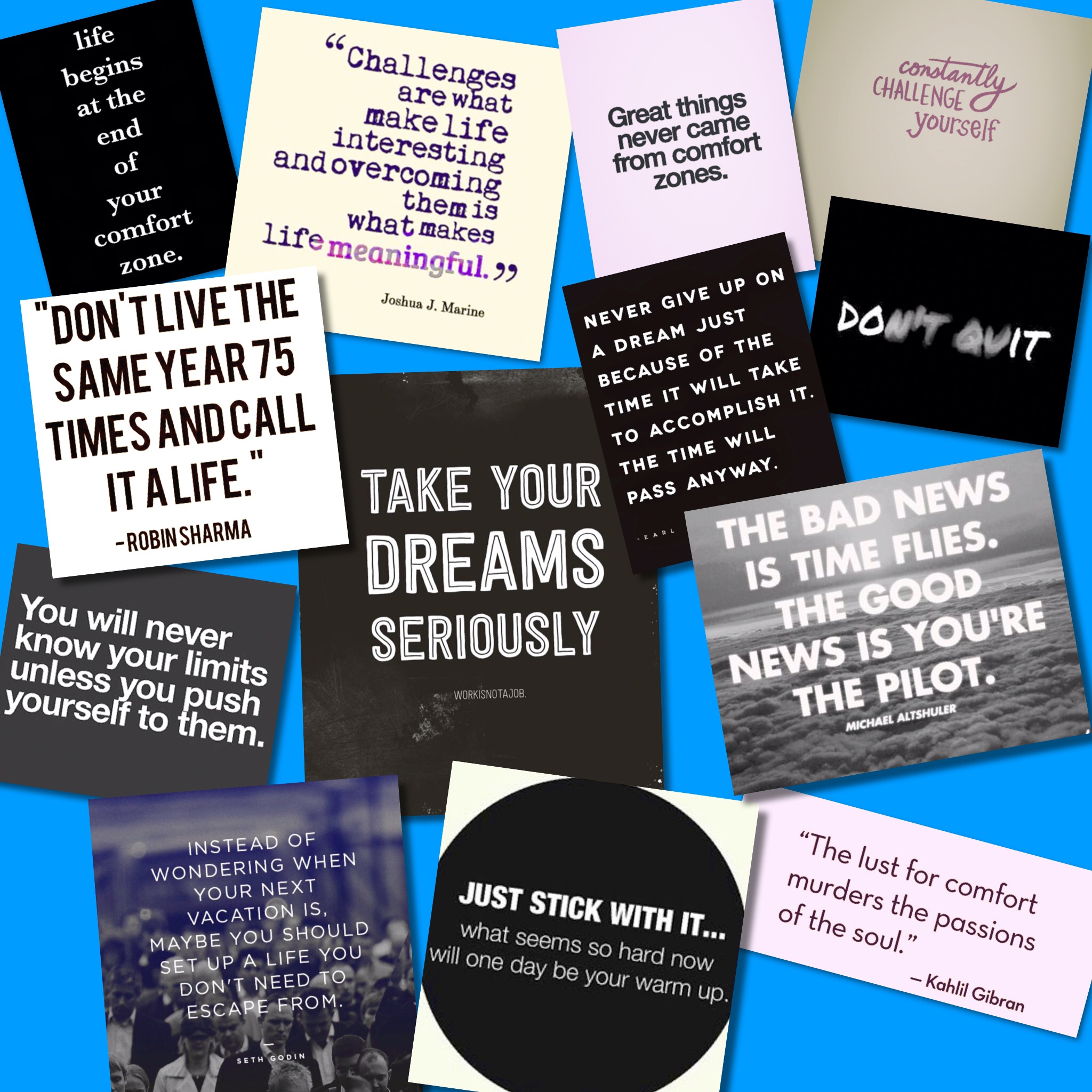
Wrong! I set these goals for a reason. They are my aspirations and dreams. All I really needed was something to help me remember who it is that I am trying to become. I needed motivation and inspiration. I needed some posters!

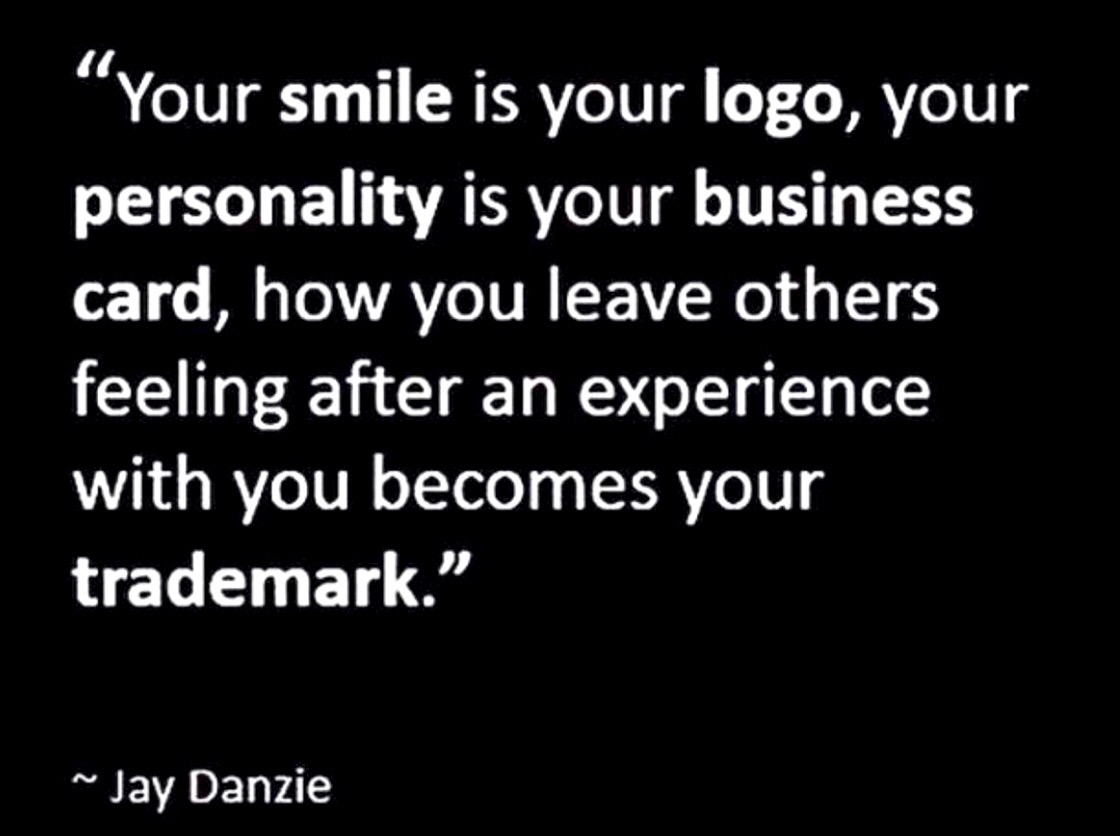
So, I made myself some. They’re a lot smaller than the ones I had in college. But they do the trick. Searching Pinterest for quotes and sayings was amazing. I used an app called PhotoGrid to put them together. They hang on the closet door in the den, just beyond my music stand. I have to admit that I felt a little like a coed again. But that’s one of the benefits of retirement: You get to reinvent yourself. You get to revisit your dreams. And, once you get past the frustration, you get to make them a reality.


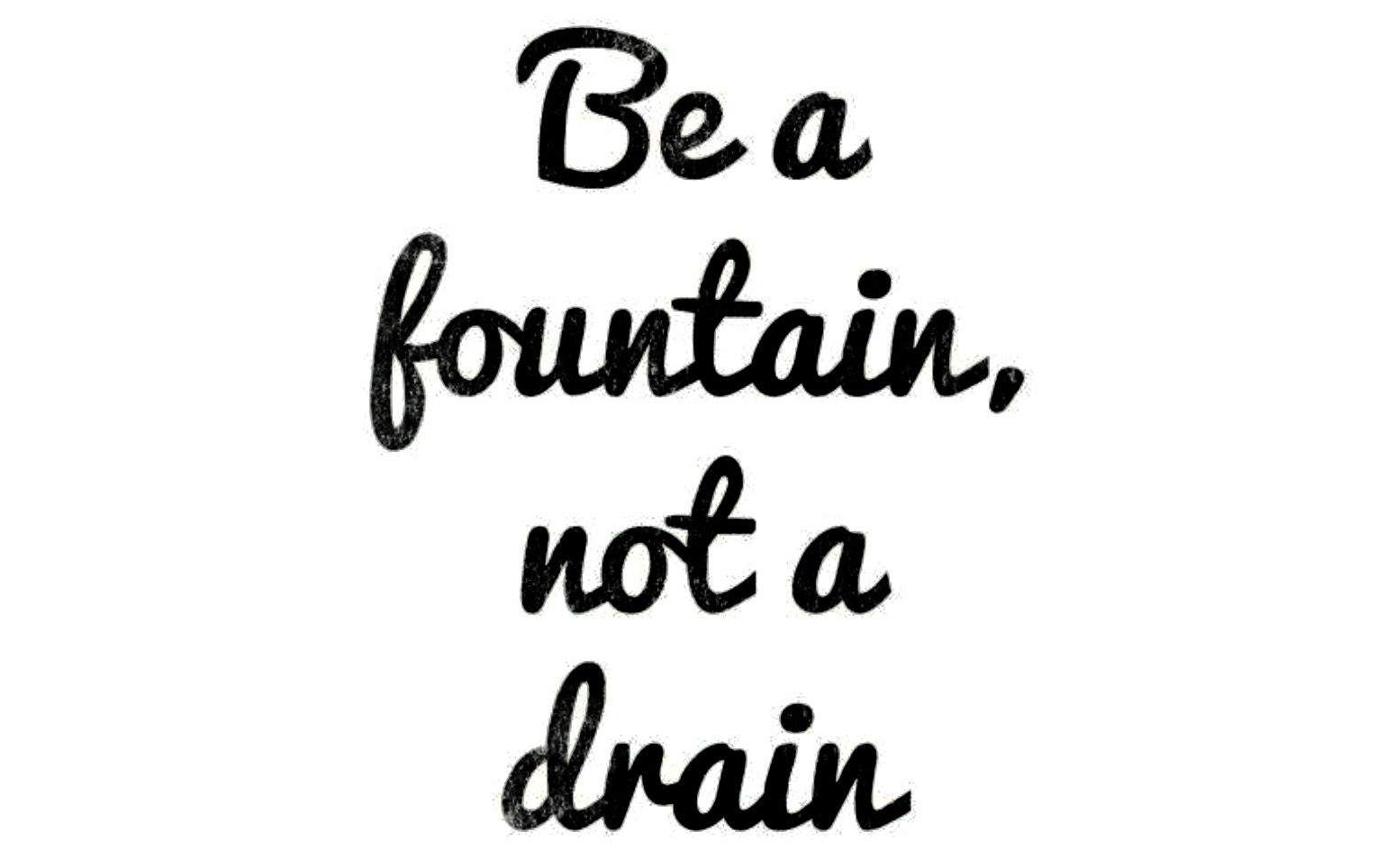
Be a fountain


Visualize, if you will, a fountain: Fresh, clear water, bubbling up into the air while making a beautiful sound! People gather at a fountain for many reasons. Historically, they would travel many miles to partake of a natural fountain. It was an essential life-source for them and their families. We cannot live without fresh water – It sustains us, cleanses us. Today, adults sit by a fountain for reflection, relaxation or rejuvenation. Children are drawn to a fountain instinctively – The can’t help putting their hands in. They giggle with delight!

   
   Full Definition of fountain (From Merriam Webster): the source from which something proceeds or is supplied…. a spring of water issuing from the earth….a reservoir containing a liquid that can be drawn off as needed.

Now, think about a drain. It sucks things away, pulling constantly, until only emptiness remains. We drain dirty water after cleaning our dishes, our clothing and our bodies. As a kid, I was always a little afraid of swimming over the pool drain. The make ugly gurgling noises. They stink. Ick.

     Full Definition of drain (From Merriam Webster): to draw off (liquid) gradually or completely….to cause the gradual disappearance of… to exhaust physically or emotionally… to make gradually dry… to deplete or empty by or as if by drawing off by degrees or in increments.

  
Which of these best describes describes you? Most days, it’s easy to be a drain. We are always surrounded by negativity (just turn on the news). It’s hard not to succumb to it and allow to color our mood, influence our outlook. Do you know someone who is a chronic drain? Probably not your favorite person to be around, right? They suck the very life right out of us. They are critical, self-serving and impatient.

Instead, imagine yourself as a fountain: Life-giving and replenishing. Even when things are bleak, you can be a source of tranquility. Some fountains have calm pools of water or sprinkle gently instead of forcefully. You can choose which to be. People who are like fountains are self-controlled, joyful and encouraging. 

How to be a fountain and not a drain:

  • Random acts of kindness – You can be a fountain to complete strangers! I stopped at Subway the other night, on my way home from someplace. Behind me in line, there was a police officer. He looked exhausted. It was pretty late for dinner. Without him knowing, I paid for his sandwich. (The benefit of being a fountain is that you get to feel pretty good, too!)
  • Listen – Sometimes, people come to the fountain to think and not to drink. Be there for someone who needs to talk. Resist the urge to join in if they’re complaining. Reflect and validate – Don’t fan the flames. Just listen. Don’t make it about you.
  • Compliment – Tell someone when they do something well. We all like to be appreciated. We all struggle. A little recognition can go a long way to boost a friend or coworker. Just knowing that you noticed might motivate them to keep going today.
  • Be the light – Not the darkness. Keep your message upbeat, even when you have to be disparaging. Sometimes, we are called upon to be critical. Try saying, “I really like the way you did (X)! If it were my project, I think I would have tried this on (Y)…”
  • Say thank you often. And mean it. 
  • Make eye contact. Let people see what’s in your heart. Good connections include a little soul bearing. Words are only sounds, otherwise.

Be a fountain, not a drain.” One of my most favorite quotes, attributed to Rex Hudler, a baseball player-turned-commentator. I love baseball and celebrated an opening day win for the Sox this week! Most likely, he was speaking about sports. Fountains make great teammates, too. But I believe we are all partners in this life. So, there you have it! 


Just not feeling it today?

  
Have you ever wondered why, on some days, you’re upbeat and full of positive energy? On others, you’re dull and in a funk. It seems random and we look for answers: Did I get enough sleep? Eat too many carbs? 

I have a theory (of course!) Consider that our lives are moving forward every day, week by week. Much of it is routine and, hopefully, pleasant. We go to work, go to class, manage our homes, drive the car. Woven into this are the many interactions we have with family, friends, colleagues, neighbors, clients, strangers and professionals. Then, there are the things we do not control, like accidents, illnesses, losses, arguments, emotional hurts, disappointments, fears and worries. That’s a lot! It’s not always smooth sailing.

Picture the bad things as bombs that are dropped into our lives. Some are small explosions – little blips on the screen that barely slow us down. Others are detonations that cause some major fallout and require much of our attention. 

The bombs are inevitable and everyone experiences them. It’s how we perceive them, react to them and manage them that is a very individual matter. It’s influenced by so many factors: Our childhood, society, our family’s culture. Maybe you were raised by a parent with a stiff upper lip, who did not show emotion. Perhaps your family’s drama was so encompassing that your own needs were not acknowledged. Whatever the case, it shaped us in a way that is the foundation for how we face crisis today, as adults. 

I suspect that most of us are so so busy with responsibilities and obligations that we don’t let the bombshells derail us. The small stuff often gets swept under the rug in an effort to keep on moving forward. In the midst of a big eruption, we are forced to react by struggling to maintain “life as usual.” We need to keep busy – preoccupied by the mundane demands of our everyday existence. We convince ourselves that we can work around the chemo treatments or take that business trip despite an ailing spouse. 

Sometimes, it’s our built-in defense system spurring us on to believe that nothing has changed. That’s not necessarily a bad thing; at least, not at the time. But, what about later? What happens to those little fractures to our emotional armour, over time? The little things build up. The public criticism by your boss, a hurtful comment from your spouse, your constant fear about a health issue – are like scar tissue on our hearts. 

While you’re keeping your chin up and carrying on through a crisis, like the death of a parent or a potentially life ending illness, what happens when it’s over and you finally stop to catch your breath? The damages from those bombs are far reaching, whether or not we choose to acknowledge it.

What steps can we take to better deal with the repercussions? 

  • Be more aware – If something is nagging at you or throws you off course, allow yourself to dwell on it a bit. Vent to a friend or trusted coworker. Take the time.
  • Address it – Go directly to the source, but not in anger. Let them know their behavior was hurtful. Then, forgive and move on. Leave the rest up to them. 
  • Show yourself some love – You’d do it for someone else, right? Cancel plans and spend the evening doing what soothes you. Curl up with a book, watch a cheesy movie, go to bed early. It’s really okay.
  • Ask for help – If you’re dealing with something, the people who really love you are, too. We often let friends know we’re available but we just don’t know what to do. Ask her to drive you to an appointment or to make dinner for you. Someday, you can return the favor. That’s what friends are for.

Next time you’re just not feeling it, consider that maybe some old bruise on your heart needs comforting. Wrap yourself in a blanket of peace. Have a cup of tea. Do whatever brings relief or solace: Write, take a walk, sleep late. You’ll be back at it in no time. I promise.


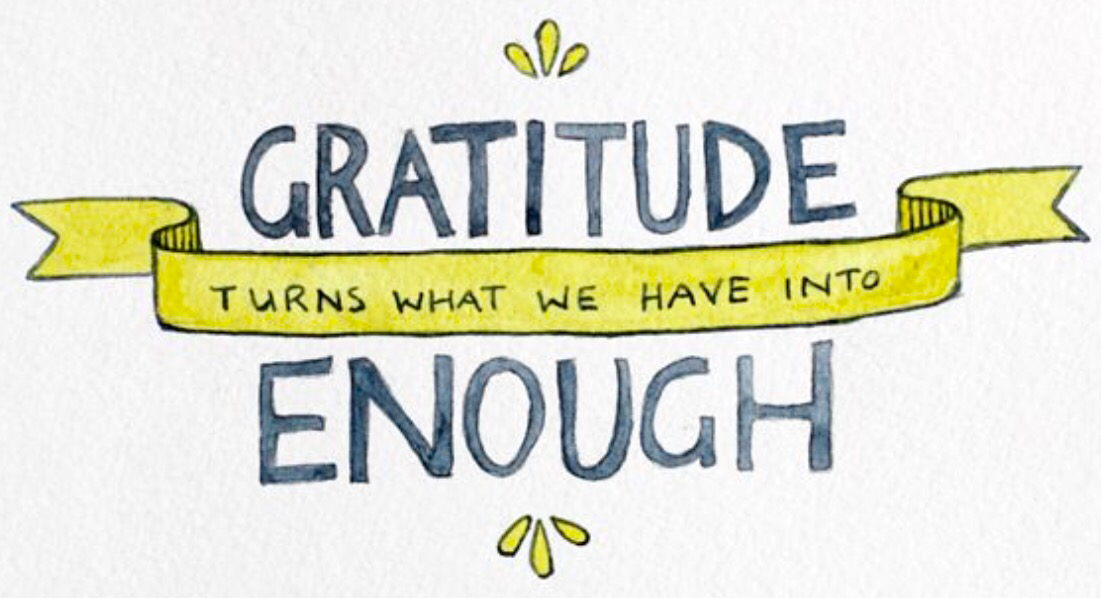
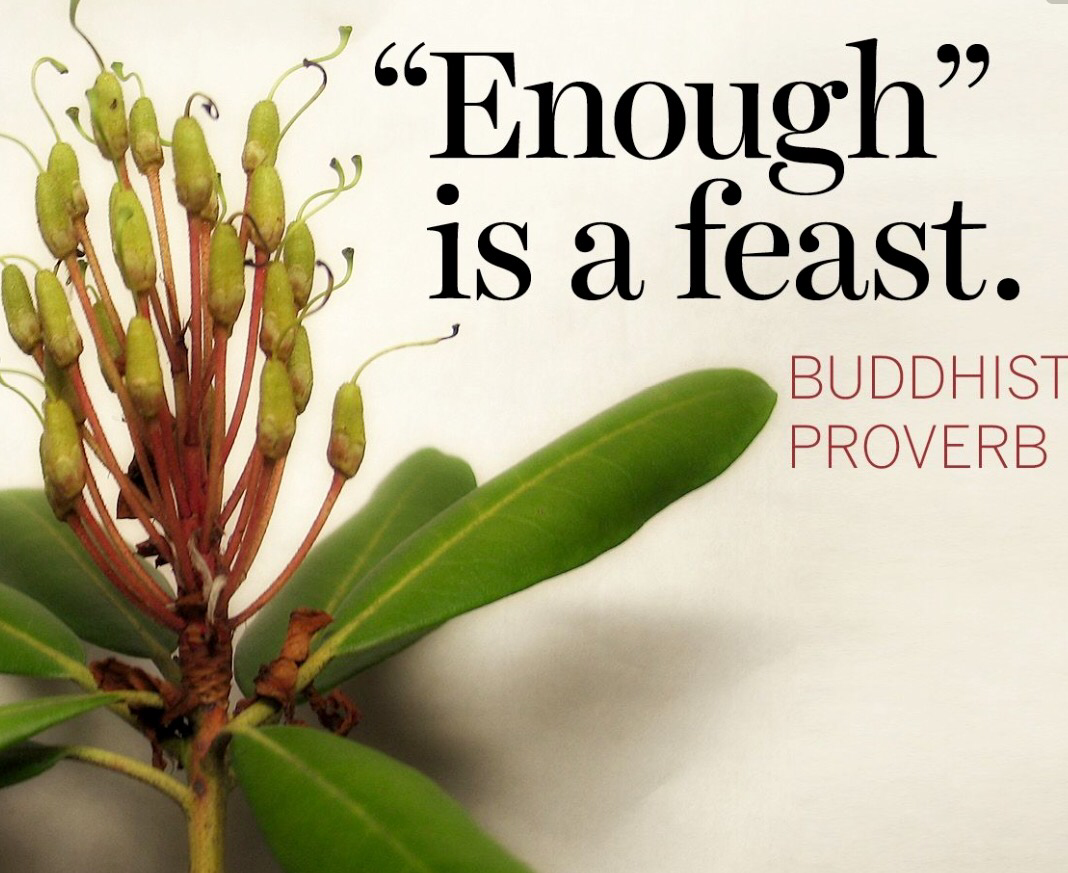
Enough


“Enough is a feast, enough is a feast.

Take what you need, save some for the least.

Save some for the least who stand at the door;

Enough is a feast, you don’t need any more.”

I was listening to an old CD yesterday, by local singer/songwriter/author Bill Harley. These lyrics stayed with me and got me thinking..

You might also recall a well-loved British nanny from the 1960s uttering the same sentiment, after using her magic powers to help the children clean the nursery. (Are you surprised to learn that Mary Poppins adhered to a Buddhist philosophy?)

So often, we fall into the trap of wanting more. We believe that we’ll be happier in a bigger house or driving a newer car. We envy our friends who have things we do not, whether it’s exotic vacations or expensive jewelry. I remember when my kids were young, they’d compare our household to that of a classmate, making the case that we were lacking in some important way. No matter how much material wealth you have, there will always be someone with more. Instead, I encouraged them to consider those who were less fortunate – Those who looked upon us as being prosperous! It changed their perspective, if just for a moment.

You may be familiar with the adage that people who love money are never happy. Perhaps you know someone, in your family or circle of friends, who fits the profile. So busy are they, lusting after their next shiny object, that they rarely seem to enjoy what they have right in front of them.

As we grow older, our “stuff” accumulates and we come to realize the frivolity of it all. We are drawn to the idea of simplifying. I, personally, struggle with this and am constantly trying to reduce the collections that fill my home. Maybe that’s why these lyrics spoke to me. When you really think about it, do we really ever need more than enough of anything? Of course, the answer is no.

Enough (adjective)

1.adequate for the want or need; sufficient for the purpose or to satisfy desire  (Dictionary.com)
So, if enough is sufficient to satisfy our desire, why on earth would we think that we should have more? And yet…. We’re all guilty.

I understand that there are entire generations or cultures among us who faced devastating losses that contributed to a tendency to amass more than what is required. I also suspect that their versions of ‘more’ fulfill a deeply seeded need, unlike yours or mine. We are simply conditioned to want more. Perhaps, we are trying to fill an emotional void. Maybe, there is something to be proven. Whatever the reason, wanting more than we need is self destructive.

  • It’s wasteful. We squander things that can be of use by someone who really needs them.
  • It’s greedy. Falling prey to this deadly sin makes us selfish.
  • It’s distracting. We fail to appreciate what we have – how lucky we are to have enough.
  • It’s irreverent. Ignoring the realm of the spiritual feeds the ego and leads, ironically, to emptiness 

Take a moment today to look around you. Think about what might be enough. I’m not spreading guilt here – Not asking anyone to take on martyrdom! If you’ve worked hard for that newer model car and it will make your life better, by all means, go for it! Just be aware of the importance and emotional affinity we often attach to luxuries. Learn to appreciate having enough.

“Earth provides enough to satisfy every man’s needs, but not every man’s greed.” – Mahatma Gandhi


Some deep thinking..

  
Last week, I visited Concord, Massachusetts. I walked among the gravestones of some pretty impressive American writers and thinkers. They are buried in the very forest where they often sought inspiration and vision, nearly 200 years ago. It’s not possible to leave them and not feel some arousal of deep thought or an appreciation for their extraordinary journeys of self actualization.
                “Rather than love, than money, than fame, give me truth.” – Thoreau
                                                                 ~~~~~~~~~
TRANSCENDENTALISM is a big, fancy word. What does it mean? According to Google, the ideology is “based on the idea that, in order to understand the nature of reality, one must first examine and analyze the reasoning process that governs the nature of experience.” Huh?        

Even upon reading the definition, it’s difficult to comprehend the scope of what it means to adhere to the combination of philosophy, religion and politics. Yet, the concept was widely known – and practiced – in the 1830s, right here in New England. How, you might wonder, could they have managed to share ideas and communicate without telephones, the Internet or even a reliable newspaper? 

Early transcendentalists would likely have balked at much of modern technology, anyway. Their core belief was that individuals possess inner knowledge that “transcends” – or surpasses – what can be seen, heard, touched or felt physically. People who subscribed, like Henry David Thoreau and Ralph Waldo Emerson, took to the woods for research, not Google. 

The foundations of Transcendentalism are truth and self-reliance. Emerson and Thoreau both wrote extensively about it. The way to find this truth, they said, is to communicate with nature and search within one’s self. Society and its institutions are seen as destructive. Another tenant is that God exists in all things, making church unnecessary. One only needs be in tune with himself and the natural world. Materialism destroys the meaning of life. 

In their search for truth, they rejected the idea of miracles as inspiration. Transcendentalists respected Jesus, but also found religious value in writings beyond the Bible, including those of Buddhists, Hindus, and Muslims. They were pioneers in the American study of comparative religion.

Yet, like something out of the 1960s, the early transcendentalists believed in intuition and artistic expression. In their world, all human inspiration, biblical or otherwise, originated from the same divinity. Artists, especially poets, were viewed as prophets and poetry as a potential source of divine revelation.

The search for truth, intuition and self-reliance colored their approach to social problems and political Issues. Transcendentalists believed it acceptable to break laws if one’s moral code found them to be unjust. To behave otherwise might cause them to become involved in a personal dabble in evil: Devine inspiration was blunted by social conformity, such as laws. 

Transcendentalists criticized many social structures, believing they prevented individual spiritual development. They saw slavery as inherently wrong and protested against it, some becoming active in the abolitionist movement. They placed great importance on the spiritual value of nature. Thoreau is still regarded as a founder of today’s environmental movement.

Transcendentalism has always had its critics. They were accused of undermining Christianity and of putting too much emphasis on the individual – at the expense of society as a whole. Yet, American literature, religion, philosophy, and politics have all been profoundly shaped by the movement.

Whatever your opinion, they surely were great examples of ‘thinking outside the box’. In a time when they had to travel great distances on horseback to be with like-minded people, just to communicate, it was not an obstacle. Their thinking influenced those who became founders of our nation. They shaped society then and continue to do so today, through their writing.
  

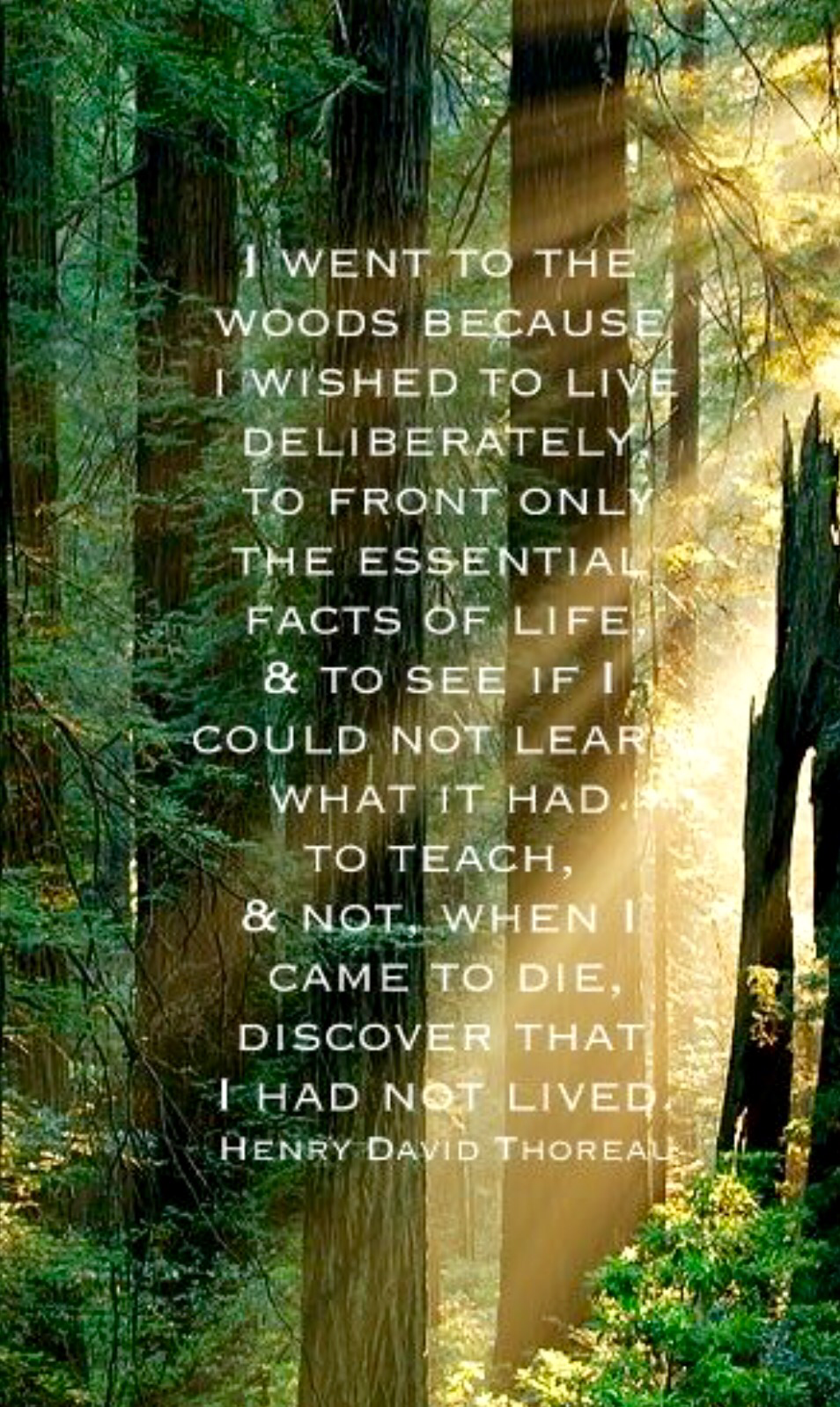
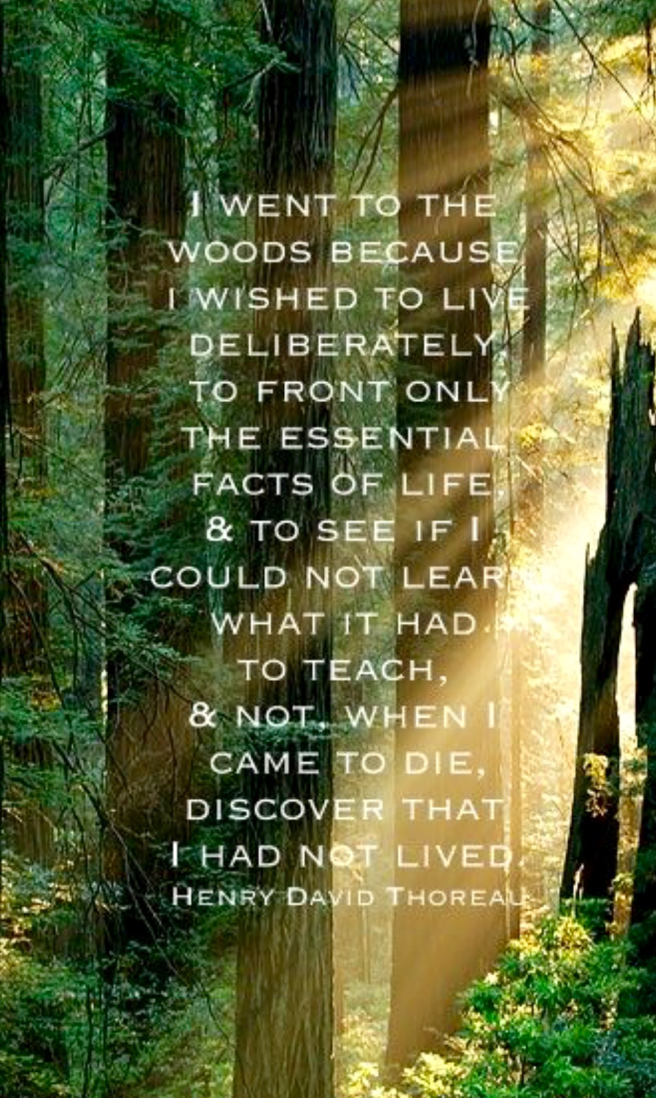
“I went to the woods because I wished to live deliberately, to front only the essential facts of life, and see if I could not learn what it had to teach, and not, when I came to die, discover that I had not lived. I did not wish to live what was not life, living is so dear; nor did I wish to practice resignation, unless it was quite necessary. I wanted to live deep and suck out all the marrow of life, to live so sturdily and Spartan-like as to put to rout all that was not life, to cut a broad swath and shave close, to drive life into a corner, and reduce it to its lowest terms, and, if it proved to be mean, why then to get the whole and genuine meanness of it, and publish its meanness to the world; or if it were sublime, to know it by experience, and be able to give a true account of it in my next excursion. For most men, it appears to me, are in a strange uncertainty about it, whether it is of the devil or of God, and have somewhat hastily concluded that it is the chief end of man here to “glorify God and enjoy him forever.”

“Still we live meanly, like ants; though the fable tells us that we were long ago changed into men; like pygmies we fight with cranes; it is error upon error, and clout upon clout, and our best virtue has for its occasion a superfluous and evitable wretchedness. Our life is frittered away by detail. An honest man has hardly need to count more than his ten fingers, or in extreme cases he may add his ten toes, and lump the rest. Simplicity, simplicity, simplicity! I say, let your affairs be as two or three, and not a hundred or a thousand; instead of a million count half a dozen, and keep your accounts on your thumb-nail. In the midst of this chopping sea of civilized life, such are the clouds and storms and quicksands and thousand-and-one items to be allowed for, that a man has to live, if he would not founder and go to the bottom and not make his port at all, by dead reckoning, and he must be a great calculator indeed who succeeds. Simplify, simplify.”

  – from Walden (1854) by Henry David Thoreau

On being a friend

  
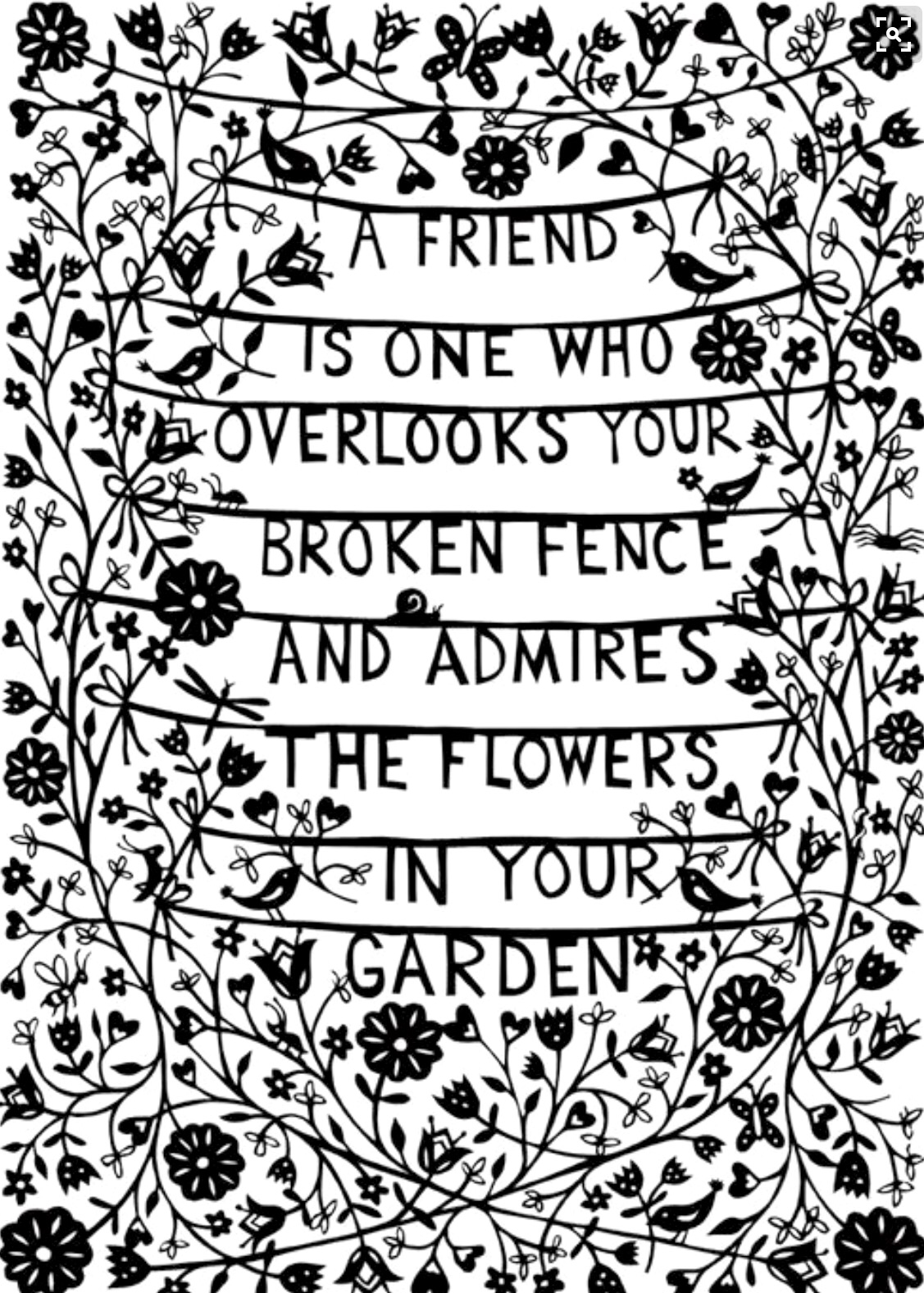
I used to have a little saying on my refrigerator that said, “To have a friend, be one.” It was a quote from Ralph Waldo Emerson, whose grave I visited yesterday. At my side was my best friend of nearly 55 years, Eileen.  Thus inspired today’s ditty!

  • Be kind. You might think this is a no-brainer, right? But if you are really comfortable around each other, you might not be as nice as you would to, say, a stranger. So, hold that door. Pay that compliment. Pick up the tab.
  • Take care of yourself. We all need a little TLC from time to time, but try not to make a habit of it. Most of us have someone to take care of, like kids, elderly parents or an ailing partner. Spending time with a friend should be an escape from responsibility. If you’re always needy, things will become one-sided and that’s just not fair. 
  • Check your jealousy. Be genuinely happy for your friend’s success, whether it’s financial freedom, wearing a size 6, remodeling her house or having the most doting husband. Don’t compare or ask yourself, “why can’t I have that?” It’s not about you.
  • Be there. Stop saying, “we should get together.” Do it.
  • Show interest in her family, job, grandkids. Don’t hog all the bragging rights. If she doesn’t offer, ask questions!
  • Be there for the hard part, not only the good. Pitch in, without being asked, when your friend experiences a rough patch.
  • Celebrate your differences as well as your similarities. Common interests or traits might have brought you together, but you’ll discover variations on some points. Respect her views and interests. Share yours (but don’t be pushy).
  • Be yourself. Be honest and genuine. Trust her to accept you as you are and do the same for her.


(Realistic) Suggestions for a Better Life


From the “Things You Already Know” file: There is plenty of self-help out there – From blogs to memes to Facebook posts. After looking at several, for inspiration, I’ve put together my own list of favorites.

Knowing it is not the same as doing it. We can all benefit from a reminder. 

Suggestions for Living a Better Life 

  • Sit alone, in silence, for at least 10 minutes a day.
  • Play more. 
  • Read something.
  • Meditate or pray. 
  • Spend time with someone over the age of 80 and under the age of10.
  • Dream big, and not just when you’re asleep.
  • Eat more foods that grow as plants, on trees or in the ground. 
  • Drink plenty of water.
  • Try to make somebody smile.
  • Don’t gossip. Much.
  • Forget regrets from the past – They will ruin your present happiness.
  • Life is a school and you are a student – Be open to learning. 
  • Eat breakfast like a king, lunch like a prince and dinner like a pauper.
  • Laugh more.
  • Don’t take yourself seriously – Nobody else does.
  • Agree to disagree.
  • Don’t compare your life to others – You have no idea what their journey is like.
  • You are in charge of your happiness – Nobody else.
  • Forgive everyone for everything.
  • Accept that things will change and might never be the same again.
  • Your job won’t take care of you when you are sick, but your friends will (If you’re lucky.)
  • Get rid of things that you don’t use and keep things that bring you joy.
  • No matter how you feel, get up, dress up and show up.
  • Do what’s right.
  • Be happy.
  • Share this with someone you care about.
  • The best is yet to come.


Talk to me!

  
I think you’ll agree with me when I make the observation that the world is changing – quickly and dramatically. It’s nothing new, really- The same has been said by every generation before ours. Technology has made the biggest difference in our lives and I have embraced it. For the most part, it has made my life better. But I can’t stop thinking how different things are for my grandson, who was born into these times. 

There are many fundamental rights of passage that remain, like learning to read or riding a bike without training wheels. Some things are timeless, but are taken to new levels with the onset of the Internet. Take bullying, for example. In my day, it was not uncommon for students to gather in the schoolyard to watch a good, old fashioned fist fight. Often, it was between a bully and an underdog. These days, the physical fighting has been contained somewhat. But what of the emotional consequences? Now, we have cyber-bullying, which has contributed to suicides by some young people. The risks have been moved out the public playground and into the privacy of the victim’s bedroom, where it will likely go undetected. The telltale black eye has been replaced by a potentially deadly bruised psyche.

What are some of the things we experienced that are becoming obsolete? There has been a lot of controversy over teaching cursive writing in school. I understand that the need for it has diminished greatly. However, it breaks my heart to think that my grandson might never be able to read the love letters written by his great grandparents during the 1950s, when my dad served in the Army. 

I’ve always prided myself on having a good sense of direction. It’s something that has served me well as I have navigated my way thru the world, both working and on vacations. But nowadays, we rely on Google maps and GPS to get us where we are going. When that fails, we haven’t a clue how to help ourselves. How many generations before evolution completely does away with this possibly life saving sense?

Remember networking? I’m talking real-life, attendance-at-a-function, meet-and-greets. You got to hone your smile, handshaking technique and conversational skills. Not any more. Today, you can make business contacts, widen your circle of colleagues, find a job, increase your clientele or hire an assistant – And never leave your recliner. 

  
The same applies to dating. Flirting is an art and it takes practice and experience. Unless, of course, you grow up with online dating, where a virtual wink gets the ball rolling. There’s no need to check out the cute guy across the room discreetly. In the comfort of your home, you can pursue potential love-interests like the menu at your favorite restaurant. Stare as long as you like! Select a comment from a drop down list with just the click of your mouse.

I don’t know about you, but I am hanging on to some of these precious, interpersonal skills. I still love meeting new people, face to face, where I can see the light in their eyes and interpret body language. When I visit museums, I want to be able to know what I am seeing and be able to read sacred, historic documents. And, if I get lost on the way home, I bet I’ll still find my way, even if I have to stop for directions and actually talk to someone!


What’s in YOUR bucket?

  
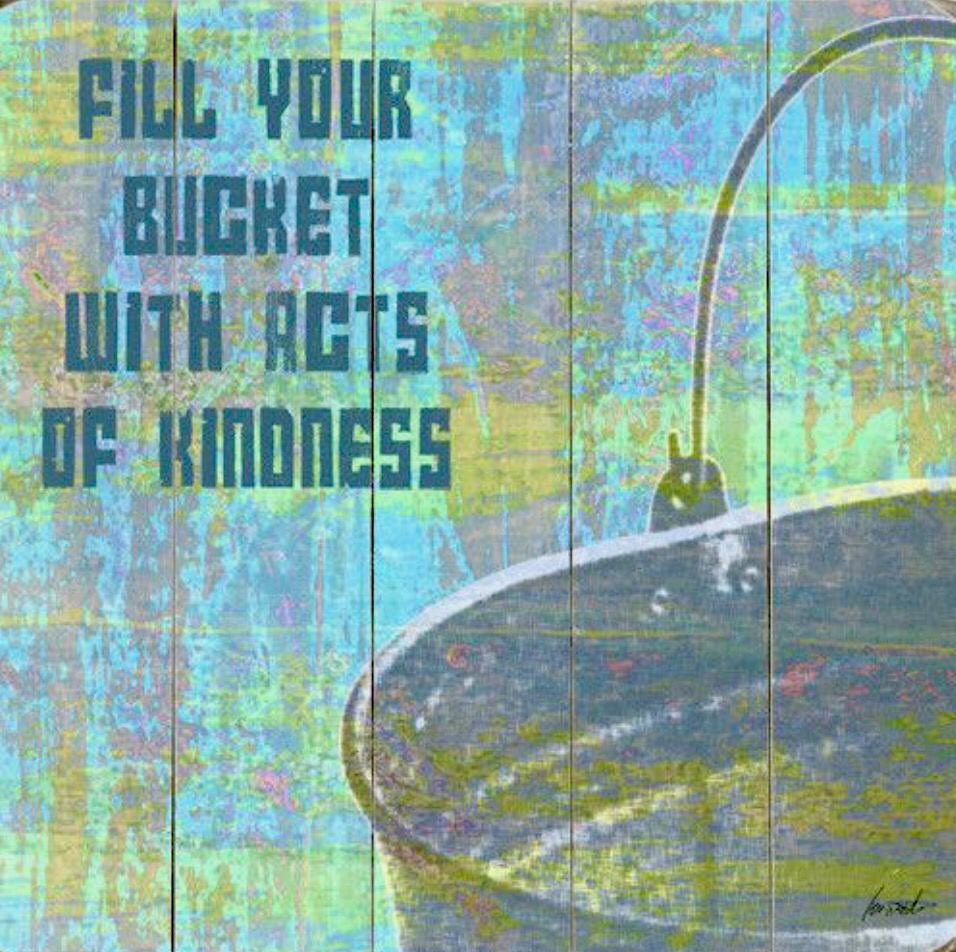
Have you heard the term ‘bucket’ used to describe the gifts you share with others? I really like the analogy. You dip your bucket into a well of experience, wisdom and talent. Then, you pour the contents into the buckets of others, to help them or to show them love, compassion or whatever it is they might need or seek. In turn, they pour some of what you’ve given them into the buckets of others. 

Who fills your bucket? Sometimes, it is intentional. We solicit an individual to fill our bucket, whether knowingly or by “coincidence.” I believe that it most often occurs when we’re not looking. Or at least, when we’re not actively aware. But, you need to be open to it – Never keep the lid securely shut. Think about it. We all know someone like that. For whatever reason, they are not giving of themselves. The inability to goes hand-in-hand and they are often not capable of, or willing to, receive what others have to offer. Their bucket is empty. 

Where do you go to fill your bucket? Maybe it’s a special place that has personal meaning that allows you to clear your mind and concentrate on what’s important. Perhaps it’s a friend – or group of friends – with whom you share common understanding. I am blessed to have multiple wells of goodness available to me: Church family for spiritual endowments, genuine friendships for emotional support, musicians for artistic offerings, writer’s groups for creative contributions… The list goes on. 

Still, there are times when I need something I can only find in solitude. You might say that I dip my bucket into my own well to find what I need. I’m doing some of that this week. After a busy week of shopping, cooking and serving others, I was feeling pretty low on reserves. My bucket was feeling  dangerously hollow. I’m spending some time alone, to write and make music. Yesterday, I managed to spend time in nature, despite the rain. Later this week, I’ll be spending a couple of days at an old inn with a close friend. It’s just what I need to replenish my bucket.

As we move thru the second half of our lives, this concept becomes both obvious and imperative. If we are involved in a relationship that does not include some refilling of our buckets, it’s okay to walk away. It can be a personal relationship or a professional one. If you’re constantly pouring your gifts into their bucket, yours will eventually be empty. 

We receive donations to our buckets in so many ways. It can be as simple as being paid a compliment or an expression of appreciation. Or, having someone pitch in to help, unsolicited, because of a sincere desire to take part. 

Join the bucket brigade: Give what you have, take what you need. If we always keep our buckets open, we will find the balance. 


Why am I here?


  When I’m driving and a song comes on the radio from 1968, I sing along. I know all the words, even if it has been decades since I last heard them. I might even recall where I was, what I was doing, with whom I was doing it and, possibly, what I was wearing at the time. 

Yet, when I leave the den and walk into the kitchen, I cannot remember why I’m there. Looking around for clues, I come up empty. I return to the den, again looking for something to spur my memory as to why I left in the first place… Nothing.

Why can I remember the lyrics to a song from nearly fifty years ago, but I cannot remember why I just walked into the room? Is it an indication of my age-related, mental demise? Could it be signs of dementia? We often joke about this, but, beneath the surface, we genuinely wonder. So I did some research. 

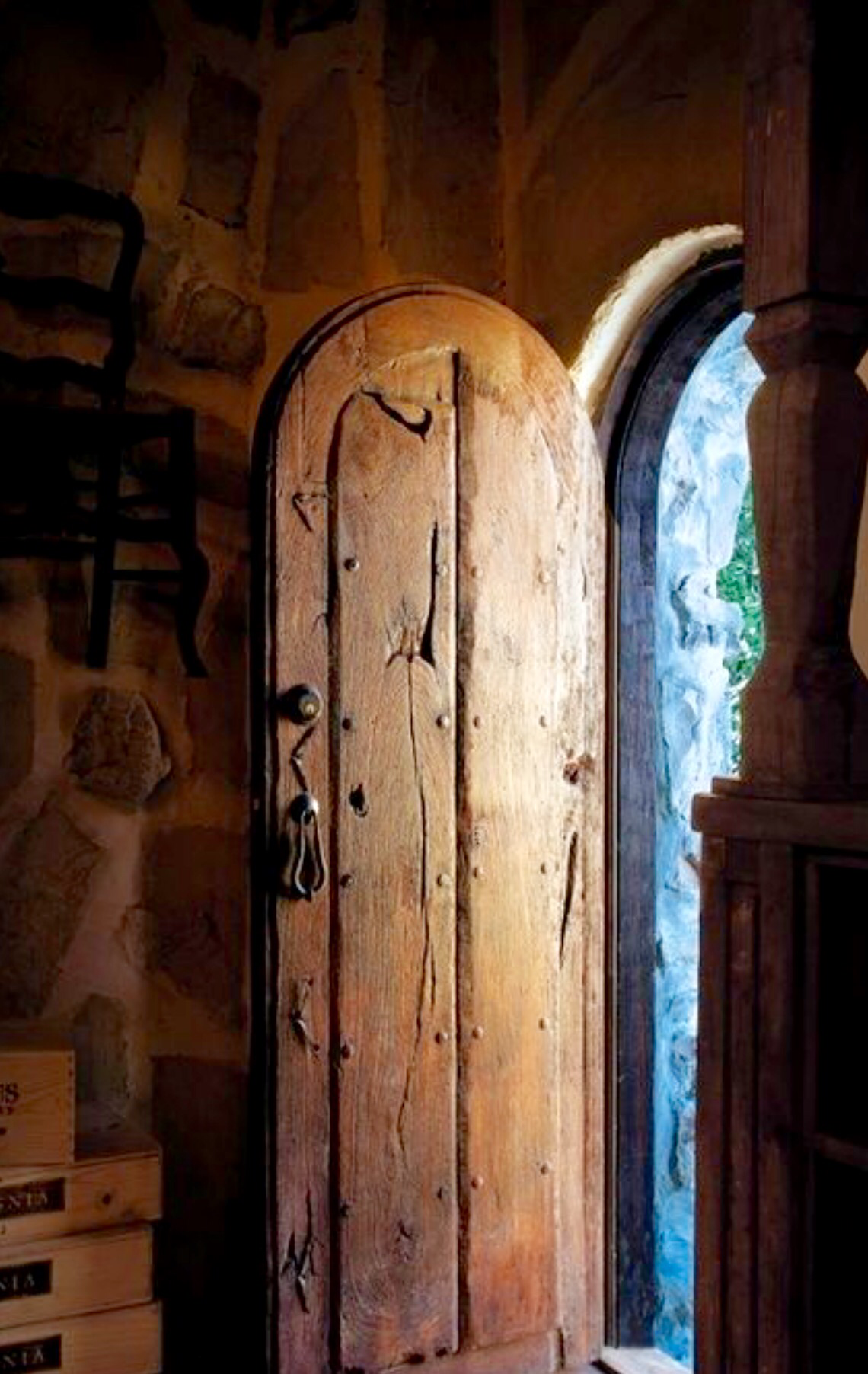
What I learned, surprisingly, is that it’s called the Doorway Effect. Walking from one room to another actually causes us to forget. Now, before you start constructing your anti-doorway helmet or move to a studio apartment, here me out. It’s more complicated than that. 

It has to do with the way our brains collect and use information about our environment. Going back to my driving example, perhaps you are familiar with the concept of doing several things at once, like driving the car and planning a vacation or having a complex conversation with a passenger. Have you ever gotten to your destination and had no recollection of actually driving there? The subconscious can take care of routine things that we have done over and over again (like driving). Meanwhile, the brain takes in other information and processes it, at the same time (like vacation plans or conversations).

Your mind is always operating like this. You might be doing one thing, but you are taking in other data that you need, from your environment. This is called a “situational model” or, more practically, the room you are in. When you leave that room and enter a new one, your brain discards the temporary information it acquired because it no longer needs it. You automatically start collecting information about your new environment, or the next room into which you have walked. The reason you are there, however, might have been included in the mind-dump of data from the previous room.

That is also why returning to the original room doesn’t necessarily work – At least not right away. That information is gone and now you’ve caused your brain to dump another set of data and begin a third situational model. Eventually, you might take in the same date as the first time, like the fact that you need the watering can because your favorite houseplant is wilting. But, if it were a thought-driven idea that sent you on your mission instead of something you can see, you may not remember.

Interestingly, there have been studies that used virtual rooms. The subjects played a videogame where they picked up an object from a table and then walked from one room into another. The object, once selected, was hidden from the subject’s view while being carried, in a box or back pocket. When the subjects arrived in the new virtual room, they mostly could not recall what the object was that they had selected to bring with them. Returning to the original room did not help. The mind operated the same way, even when moving thru virtual doorways. 

I read a fable about a woman who comes upon three men and asks each “what are you doing?” The first replies, “I’m putting brick upon brick upon brick.” The second says, “I’m building a wall.” The last man answers, “I’m building a cathedral.” Every task we approach has multiple levels. Moving from one level to the next is like walking thru the doorway. Our minds compartmentalize much more than we realize. Moving between the levels, or thru the doorway, makes us forget.

So, I am not necessarily losing my mind when I arrive in the kitchen, clueless. Apparently, what happens in the den, stays in the den….